
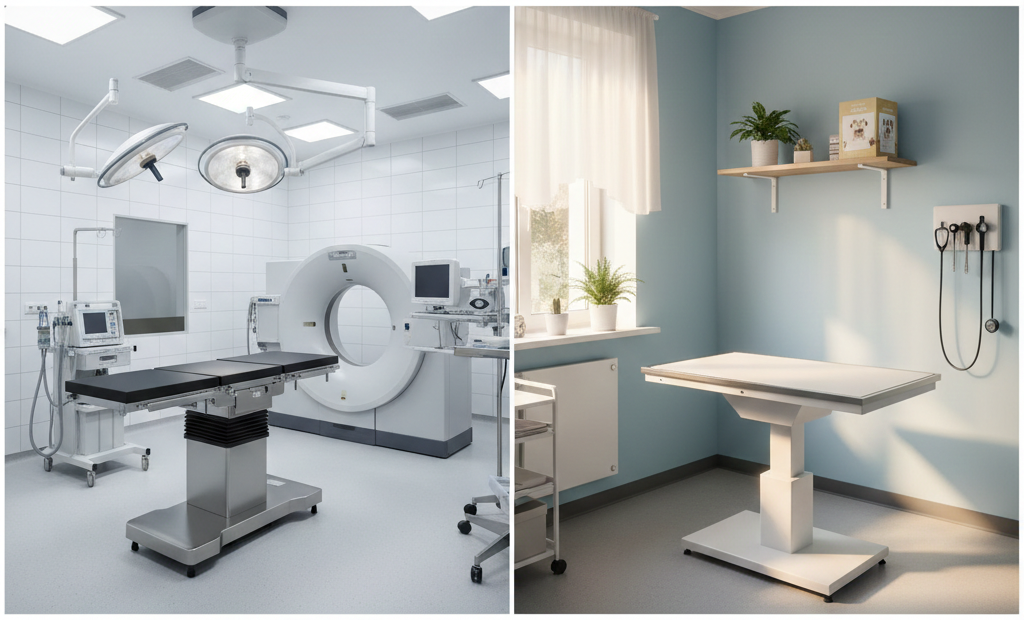
Most pet owners use the terms vet clinic and veterinary hospital interchangeably, and in casual conversation, that is fine. But when it comes to actually choosing where to take your dog or cat — especially when something is wrong — the distinction matters quite a bit. The two types of facilities are built around different purposes, staffed differently, and equipped to handle very different situations.
This guide breaks down exactly what separates a vet clinic from a veterinary hospital, what each one is designed to do well, and how to figure out which type of facility your pet needs depending on the situation. Along the way, we will look at what a full-service animal hospital near you in Clovis looks like in practice — and why the distinction is not always as black-and-white as people assume.
What Is a Vet Clinic?
A vet clinic is typically a smaller, outpatient-focused practice. The core purpose of a vet clinic is routine and preventive care — the kind of visit you schedule in advance because your pet is due for a check-up, needs a vaccination booster, or has a minor issue you have been meaning to get looked at.
Most vet clinics are structured around scheduled appointments and operate during standard business hours. They are staffed by one or a small number of veterinarians, supported by veterinary technicians and front-desk staff. Facilities tend to be compact: a few exam rooms, a basic treatment area, and a small pharmacy or product dispensary.
What a vet clinic does particularly well is relationship-based, longitudinal care. Because the same veterinarian often sees your pet year after year, they build familiarity with your pet’s health history, behavioral patterns, and individual quirks. That continuity can make it easier to catch subtle changes in health that a new provider might not notice.
Typical services offered at a vet clinic:
- Annual wellness exams and physical assessments
- Core and non-core vaccinations based on lifestyle risk
- Parasite prevention and heartworm testing
- Basic diagnostics such as fecal exams and simple bloodwork
- Nutritional guidance and weight management
- Minor wound care and skin treatments
- Prescription refills for ongoing conditions
If this type of focused, preventive-first care is what you are looking for, the wellness and preventive care program at Alta Animal Hospital in Clovis is built around exactly that philosophy — personalized plans that consider your pet’s age, breed, and individual health needs rather than a one-size-fits-all checklist.
What Is a Veterinary Hospital?
A veterinary hospital operates at a higher level of complexity. It is not just about the name — it is about the infrastructure, staffing model, and scope of care the facility is built to deliver. A true veterinary hospital can handle what a clinic cannot: surgical procedures, advanced diagnostics, urgent same-day care, and the management of complex or multi-system illness.
The defining features of a veterinary hospital are equipment, staffing, and capacity. You will typically find a dedicated surgical suite, in-house laboratory capabilities, digital imaging, and a team large enough to support overlapping cases at the same time. Many veterinary hospitals also provide same-day urgent care for situations that need immediate attention but do not necessarily warrant a 24-hour emergency facility.
For Clovis and Fresno pet owners searching for animal hospitals near me, Alta Animal Hospital at 585 W Shaw Ave is a full-service veterinary hospital — meaning it combines the accessibility of a neighborhood practice with the diagnostic and surgical capabilities that typically require a referral elsewhere. The team is available Monday through Saturday, 8 am to 6 pm, with walk-ins welcome and same-day urgent care appointments available. You can reach them at (559) 298-6509.
What a full-service veterinary hospital adds beyond a basic clinic:
- On-site surgical suite for both routine and complex soft tissue procedures
- In-house laboratory with same-visit diagnostic results
- Digital X-ray and imaging capabilities
- Anesthesia monitoring and advanced pain management protocols
- Same-day urgent care for illness and injury
- Dental X-rays and comprehensive oral procedures
- Management of complex or chronic medical conditions
Side-by-Side Comparison: Vet Clinic vs. Veterinary Hospital
The table below makes the practical differences clearer at a glance:
| Feature | Vet Clinic | Veterinary Hospital |
| Primary Focus | Preventive & routine care | Full-spectrum medical & surgical care |
| Surgical Services | Limited or none | On-site surgical suite |
| Diagnostics | Basic bloodwork, fecal exams | In-house lab, digital X-ray, imaging |
| Urgent/Same-Day Care | Rarely available | Yes, often with walk-in access |
| Staffing | 1–2 vets, small team | Larger clinical team |
| Dental Care | Basic cleaning | Full dental X-rays, extractions |
| Appointment Type | Scheduled only | Scheduled + walk-ins + urgent |
| Best For | Healthy pets needing routine visits | All life stages, illness, surgery |
Key Services That Define a Full-Service Veterinary Hospital
In-House Diagnostics
One of the clearest dividing lines between a vet clinic and a veterinary hospital is what happens when something looks wrong and the vet needs answers fast. A clinic that sends bloodwork to an outside laboratory leaves you waiting 24 to 72 hours for results. A hospital with in-house diagnostics can run a complete blood count, chemistry panel, thyroid test, or heartworm screen and have results back in about 30 minutes. That turnaround is not just convenient — it is clinically significant when your pet is unwell and time-sensitive treatment decisions need to be made.
Surgery
Routine spay and neuter procedures are among the most common surgeries in veterinary medicine, but they are still surgeries — they require proper anesthesia monitoring, sterile technique, and a clinical environment that a basic vet clinic is often not equipped to provide. A pet surgical program at a full-service veterinary hospital covers both routine procedures and more complex soft tissue interventions, with documented anesthesia protocols and post-operative care guidance built into every case.
Spay and Neuter
Speaking of surgical procedures, spay and neuter surgery is one of the most health-impacting decisions a pet owner can make. Having it performed in a hospital setting — where monitoring equipment, trained staff, and a sterile surgical suite are all standard — gives your pet the best possible environment for a safe procedure and smooth recovery. When you search for spay and neuter near me in Clovis, it is worth asking specifically about the surgical standards the clinic follows, not just whether they offer the procedure.
Dental Care
Dental disease is one of the most underdiagnosed conditions in companion animals. By the time visible symptoms appear — bad breath, reluctance to chew, dropping food — the underlying disease is often already advanced. A veterinary hospital that offers full pet dentistry — including dental X-rays, ultrasonic scaling, polishing, and extractions — can catch and treat periodontal disease before it affects your pet’s organs, appetite, or quality of life. Most basic vet clinics do not have this capability on-site.
Vaccinations and Parasite Prevention
Both vet clinics and hospitals offer vaccinations and parasite prevention, but the quality of that conversation varies significantly. A hospital with a robust preventive care program will tailor vaccine recommendations to your pet’s actual lifestyle, geographic risk factors, and life stage — rather than simply applying a standard protocol. In the Central Valley, for instance, Valley Fever exposure, heartworm risk, and tick prevalence all factor into a genuinely individualized prevention plan.
Senior Pet Care
Aging pets have needs that go well beyond routine annual check-ups. Senior pet care at a full-service hospital typically involves more frequent wellness visits, targeted diagnostic panels to monitor kidney function, thyroid levels, and liver health, as well as pain management conversations and quality-of-life assessments. This kind of proactive senior care is where the gap between a basic vet clinic and a veterinary hospital becomes most visible — and most consequential.
Urgent and Same-Day Care
A sudden illness, a suspected toxin ingestion, a dog that is limping badly — these are situations where ‘the next available appointment’ is not good enough. A veterinary hospital with urgent same-day care capabilities bridges the gap between a routine clinic visit and a full emergency hospital. At Alta Animal Hospital in Clovis, same-day urgent appointments are available and walk-ins are welcome, so your pet does not have to wait when something cannot.
When Should You Go to a Vet Clinic vs. a Veterinary Hospital?
Matching the type of care to the situation is the most practical application of understanding this distinction.
A vet clinic is typically right for:
- Scheduled annual wellness exams for healthy pets
- Vaccine boosters and parasite prevention product refills
- Minor skin issues, ear cleaning, or nail trims
- Nutritional consultations and weight checks
- Routine follow-up visits for stable chronic conditions
A veterinary hospital is the better choice when:
- Your pet is visibly unwell or declining quickly
- You need same-day or urgent attention for an injury or illness
- A surgical procedure has been recommended
- Your pet needs dental work beyond a basic cleaning
- You want in-house bloodwork with same-visit results
- Your senior pet needs a more comprehensive care plan
- You want a single practice to handle both routine and complex needs
For most Clovis pet owners, the ideal solution is a facility that functions as both — a practice that handles routine annual care but also has the staff, equipment, and capacity to step up when something more serious arises. That is the practical advantage of choosing Alta Animal Hospital as your primary veterinary home. The full-service model means you are not maintaining two separate provider relationships or scrambling to explain your pet’s history to a new team in a stressful moment.
What Makes Alta Animal Hospital Different From a Standard Vet Clinic in Clovis
When Clovis and Fresno families search for a veterinary hospital near me, they often find Alta Animal Hospital at the top of local results — and for practical reasons. The practice has served the Clovis community since 1978, and under the care of Dr. Hukampartap Singh, DVM, it has invested significantly in the capabilities that separate a hospital from a clinic.
Dr. Singh is ECFVG-certified and a member of the American Veterinary Medical Association, with hands-on expertise in general practice, urgent care, soft tissue surgery, and dental procedures. He grew up surrounded by animals on a family farm and comes from a family of veterinarians — a background that shapes how he approaches patient care: practically, attentively, and with a genuine stake in outcomes.
The team also stands out for its language accessibility. In a community as diverse as Clovis and the Central Valley, the ability to speak with your veterinarian in your own language — whether that is English, Spanish, Punjabi, or Hindi — is not a small thing. It changes the quality of the conversation and, ultimately, the quality of care.
What you will find at Alta Animal Hospital that goes beyond a basic vet clinic:
- In-house lab results in 30 minutes — no outside lab delays
- A dedicated surgical suite for routine and soft tissue procedures
- Full dental services including digital dental X-rays
- Urgent and same-day care available Monday through Saturday
- Walk-ins welcome — no appointment required for most visits
- Multilingual staff: English, Spanish, Punjabi, Hindi
- Over 45 years serving Clovis and the Fresno area
Frequently Asked Questions
-
Is a vet clinic or veterinary hospital better for my pet?
Neither is universally better — it depends on your pet’s needs. A vet clinic is well-suited for routine, preventive care. A veterinary hospital can do everything a clinic can, plus surgery, advanced diagnostics, and urgent care. If you want a single practice that can handle the full range of your pet’s needs at any life stage, a full-service hospital is the stronger choice.
-
Can I take my pet to a veterinary hospital without a referral?
At most general veterinary hospitals, yes. You do not need a referral from another provider to bring your pet for a first visit. Specialty hospitals — those focused on oncology, cardiology, or neurology — sometimes require a referring veterinarian, but general practice hospitals like Alta Animal Hospital welcome new clients directly.
-
What should I do if my pet needs urgent care on a Saturday?
Alta Animal Hospital is open Saturday from 8 am to 6 pm and accepts walk-ins. For urgent concerns that come up during business hours, you can call (559) 298-6509 or walk in to their Clovis location at 585 W Shaw Ave. Their urgent same-day care is designed for exactly this type of situation — when something cannot wait until Monday.
-
Do veterinary hospitals offer preventive care, or are they only for sick pets?
Full-service veterinary hospitals handle the complete spectrum of care, from routine wellness visits and vaccine schedules to surgical procedures and emergency situations. Alta Animal Hospital’s wellness and preventive care program is a core part of what they offer — not an afterthought. Many families use the hospital as their primary provider for healthy pets and rely on the same team when something more serious comes up.
-
How do I know if a clinic near me is actually a full-service hospital?
Ask directly. Key questions include: Do you have an on-site surgical suite? Can you run bloodwork in-house? Do you offer same-day or urgent care? Do you have digital X-ray capabilities? Do you perform dental procedures including extractions? If the answers are consistently yes, you are dealing with a full-service veterinary hospital — even if the facility uses the word ‘clinic’ in its name.
Choosing the Right Facility Starts With Knowing What to Look For
The terminology can be confusing, and the lines between a vet clinic and a veterinary hospital have blurred as more practices have expanded their capabilities. What matters more than the label on the door is what actually happens inside — the equipment available, the experience of the team, the accessibility of care, and whether the facility can support your pet from a healthy puppy through every stage of life.
If you are in Clovis or the greater Fresno area and searching for animal hospitals near me that offer both the familiarity of a neighborhood clinic and the capabilities of a full-service hospital, Alta Animal Hospital is worth a visit. They are located at 585 W Shaw Ave, Clovis, CA 93612, open Monday through Saturday from 8 am to 6 pm, and reachable at (559) 298-6509. Walk-ins are always welcome, and same-day urgent care is available when your pet cannot wait.
To explore the full range of services or book an appointment, visit altaanimalhospitalclovisca.com — and bring the right questions. A good veterinary team will welcome them.