

California’s mild winters and warm, dry summers sound great for humans, but they are nearly perfect for fleas and ticks too. If you have ever wondered why your neighbor’s cat suddenly started scratching in December, or why your hiking dog came home with a tick in late February, the answer is climate. At Alta Animal Hospital Clovis, we see parasite-related cases in every month of the calendar — not just the summer peak most owners expect.
This guide covers what Central Valley pet owners actually need to know about flea and tick prevention: the local risks, how prevention works differently for dogs and cats, what each product category does, and the mistakes that put even indoor pets in harm’s way.
Why California’s Climate Makes Flea & Tick Prevention a Year-Round Job
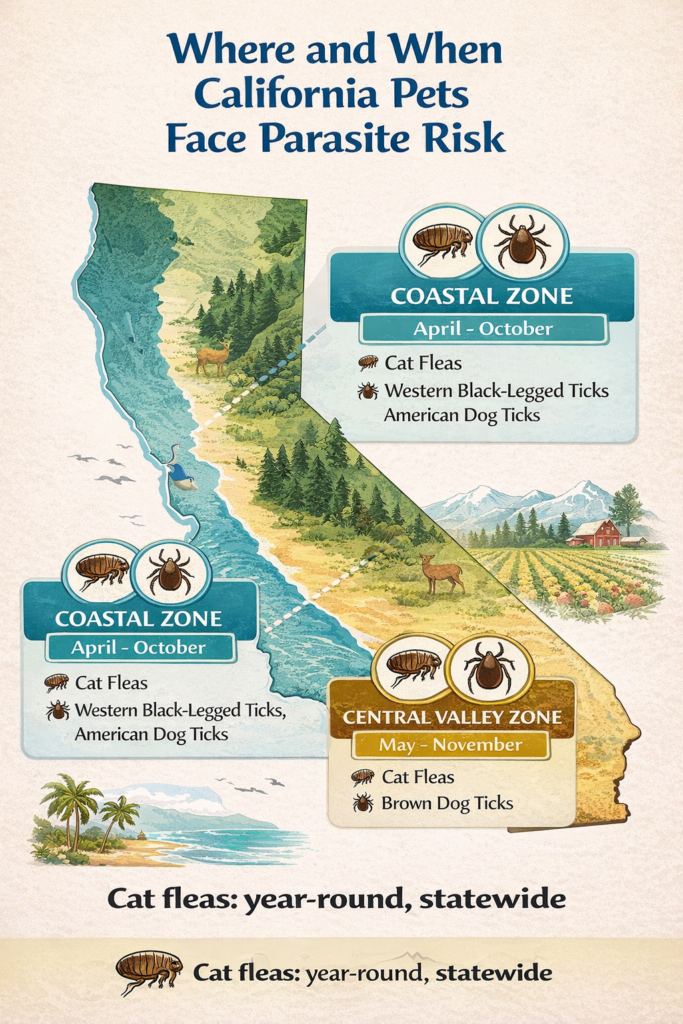
Most parasite prevention advice online assumes your pet lives somewhere with hard winters. California does not have those. In the Central Valley — Clovis, Fresno, and the surrounding foothills — temperatures rarely fall low enough, long enough, to kill fleas in the environment. A few chilly nights in January do almost nothing to the adult fleas sheltered in your carpets, the pupae waiting in the cracks of wood flooring, or the ticks tucked into leaf litter under the shade of an oak tree.
That creates a reality most newer California pet owners are unprepared for: there is no off-season. The Companion Animal Parasite Council recommends year-round, lifelong parasite prevention for exactly this reason. Skipping three or four months in winter is the single most common mistake we see, and it is how most spring infestations start.
Understanding the Risks: Flea and Tick-Borne Diseases in California
Diseases Fleas Carry
Fleas are far more than an itch. The common cat flea (Ctenocephalides felis) — which, despite the name, infests dogs just as readily — can transmit tapeworm, trigger flea allergy dermatitis, and carry Bartonella, the bacterium responsible for cat scratch disease in humans. Severe infestations in young or small pets can cause life-threatening anemia from blood loss alone.
Diseases Ticks Carry
California hosts several tick species of real medical concern. The western black-legged tick (Ixodes pacificus) carries Lyme disease, with higher-risk zones in coastal and foothill regions. The Pacific Coast tick can transmit Rocky Mountain spotted fever and Pacific Coast tick fever. The brown dog tick — increasingly common across warmer California counties — transmits ehrlichiosis and babesiosis. The CDC’s tick-borne disease resources track the geographic spread of these pathogens, and the pattern in California has been expanding year over year.
Why Indoor Pets Are Still at Risk
This surprises people: fleas and ticks hitch rides. Fleas come in on shoes, clothing, other pets, and the occasional visiting rodent. Ticks ride in on your dog and can drop off before you ever spot one. Indoor-only cats living in apartments with no outdoor access still get fleas every year at our clinic. Unless your home is a sealed biosphere — and nobody’s is — your pet has exposure.
Flea and Tick Prevention for Dogs
Dogs tolerate a broader range of prevention products than cats, because their physiology handles more active ingredients safely. That flexibility means choosing the right option comes down to your dog’s lifestyle, age, and health status rather than what is available on the shelf.
Oral Chewable Medications
Monthly and quarterly oral chewables in the isoxazoline class have become the dominant prescription option for dogs over the past decade. They work systemically — the parasite bites your dog, ingests the medication, and dies before transmitting disease in most cases. Advantages include swim-proof protection, no residue on coat or furniture, and consistent dosing. Your veterinarian will review medical history carefully before prescribing, as the FDA has issued guidance about rare neurological reactions in dogs with pre-existing seizure disorders.
Topical Spot-On Treatments
Applied between the shoulder blades, topicals spread across the skin through natural oil migration. They kill fleas and ticks on contact and generally hold up for about 30 days. These are a practical choice for dogs who refuse to eat chewables or owners who simply prefer not to dose orally.
Long-Duration Prevention Collars
Modern prevention collars release active ingredients steadily over 6 to 8 months. They are popular with owners who dislike the monthly reminder, but they need a proper fit to work as intended, and a small percentage of dogs develop localized skin irritation where the collar sits.
How to Choose What Is Right for Your Dog
Think about real exposure. A shepherd mix who hikes the San Joaquin foothills every weekend needs strong tick coverage. A senior small-breed dog who rarely leaves the backyard has different priorities. Annual wellness and preventive care visits are exactly where that conversation should happen, not the pet store aisle.
Flea and Tick Prevention for Cats
Cat prevention is where owners make the most dangerous mistakes, and the stakes are genuinely life-or-death.
Why Cat Prevention Is Fundamentally Different
Cats lack the liver enzymes that dogs have to safely break down certain insecticides. Permethrin, a common active ingredient in many over-the-counter dog products, is severely toxic and often fatal to cats even in small doses. Never apply a dog flea product to a cat, and keep recently treated dogs separated from cats in the household for at least 24 to 48 hours until the topical product is fully absorbed into the dog’s skin.
Safe Topical Options for Cats
Several spot-on formulations are specifically developed for cats, using active ingredients in the fipronil, selamectin, and imidacloprid families. Applied at the base of the skull where the cat cannot groom it off, these provide 30 days of flea control and, in some cases, ear mite and intestinal parasite coverage as a bonus.
Oral Options for Cats
Prescription oral tablets and flavored chewables are now available for cats, including long-duration formulations that cover 12 weeks in a single dose. These are ideal for cats who tolerate pilling or for multi-cat households where mutual grooming can spread topical products between animals.
Indoor Cats Still Need Protection
The most common reason indoor cats end up in our exam room scratching uncontrollably is the assumption that they do not need year-round flea prevention. A vaccinations and parasite prevention plan built around your cat’s real environment will include coverage matched to actual exposure — not theoretical exposure.
Product Category Comparison
| Product Type | Species | Coverage Duration | Best For |
|---|---|---|---|
| Oral chewable (isoxazoline class) | Dogs; some formulations for cats | 1–3 months | Active dogs, swimmers, households with small children |
| Topical spot-on | Dogs and cats (species-specific) | ~30 days | Pets who resist oral medication |
| Long-duration collar | Dogs and cats (species-specific) | 6–8 months | Low-maintenance preference |
| Oral prescription for cats | Cats only | Monthly or 12-week options | Cats who tolerate pills |
| Permethrin-based topical | Dogs only — NEVER cats | 30 days | Dog-only households |
Always confirm a product is species-specific and age-appropriate before the first application. Package labeling is there for a reason.
Environmental Control: Your Home and Yard
Treating the pet handles only half the problem. The other half lives in your environment. A single female flea lays up to 50 eggs per day, and those eggs scatter wherever your pet walks, lies down, or sheds.
Inside the home, vacuum high-traffic areas, pet bedding, and baseboards frequently during an active infestation, then empty the canister outdoors rather than into a kitchen trash can. Wash pet bedding in hot water weekly. In the yard, keep grass trimmed, clear leaf piles quickly, and create a gravel or mulch barrier between the lawn and any wooded or shaded borders — ticks actively avoid crossing dry, sunny ground.
How to Spot a Flea or Tick Problem Early
On your pet, watch for excessive scratching, red or irritated skin at the base of the tail, “flea dirt” (tiny black specks that turn rust-red when pressed against a damp paper towel), thinning hair, and hot spots. For ticks, run your hands slowly through your pet’s coat after every outdoor outing — ears, between toes, under the collar, and around the tail base are the favorite hiding spots.
In your home, small black specks on light-colored carpet or pet bedding, red bite marks on your own ankles, or a suddenly restless pet who cannot get comfortable are all early warnings worth acting on immediately.
Case Study: A Preventable Ehrlichiosis Scare
Last fall, a four-year-old Labrador named Moose came in for what his owner assumed was a seasonal slump — tired, low appetite, a mild fever. Moose had been off flea and tick prevention for about six months because his owner “ran out of the chewable and kept forgetting to refill.”
Bloodwork run through our in-house diagnostics lab showed low platelets and mildly elevated liver values, a pattern that triggered a tick-borne disease panel. He tested positive for Ehrlichia exposure, almost certainly picked up on a Labor Day camping trip to the Sierra foothills.
Moose responded well to a course of doxycycline and is back to stealing socks and chasing tennis balls, but his recovery took weeks and several rechecks. His owner now keeps a calendar reminder three days before each refill is due. “Cheaper than that bill,” she told us, “and I am never forgetting again.”
When to Contact Your Veterinarian
Call your veterinary team if you notice a sudden heavy flea burden that topicals are not controlling, a tick embedded in your pet for an unknown length of time, a lump or infection where a tick was previously attached, vomiting or stumbling after applying a new product, or lethargy and fever in a dog or cat who has been outdoors recently. For severe reactions to medication or signs of systemic illness, same-day urgent veterinary care is more appropriate than waiting for an appointment later in the week.
For owners searching for a new vet near me in Clovis or Fresno, our guide on how to choose the best veterinarian in Clovis walks through what to look for when evaluating a local provider.
Frequently Asked Questions
-
How often should I apply flea and tick prevention to my pet?
Most prescription topicals and oral chewables are dosed every 30 days, though several newer oral products now offer 12-week coverage for dogs and cats. Prevention collars typically last 6 to 8 months. Year-round use is the current recommendation for California pets because the climate never provides a reliable dormant window. Missing even one dose creates a gap during which your pet is unprotected and fleas can re-establish in your home environment.
-
Can I use dog flea prevention products on my cat?
No — and this is one of the most dangerous assumptions pet owners make. Many dog flea products contain permethrin, which cats cannot metabolize safely. Even a small dose can cause severe tremors, seizures, and death in cats. Always confirm a product is labeled specifically for cats before applying it, and keep newly treated dogs separated from cats in the household for at least 24 to 48 hours after topical application.
-
Do indoor-only cats really need flea prevention?
Yes. Indoor cats routinely develop flea infestations brought in by other household pets, visitors, or simply on human shoes and clothing. Rodents that find their way into garages and attics are another reliable source. Because cats groom fastidiously, you often will not notice fleas until the infestation is advanced and your cat is already miserable or beginning to lose hair. Year-round prevention is cheaper and less stressful than resolving an active infestation after the fact.
-
What should I do if my pet has a reaction to a flea medication?
Stop using the product immediately and contact your veterinarian. Mild reactions can include localized skin irritation at topical application sites, drooling, or temporary lethargy. Severe reactions involve tremors, seizures, repeated vomiting, or difficulty walking. For severe symptoms, a same-day urgent visit is warranted rather than waiting. Bring the product packaging with you so the veterinary team can review the active ingredients and dosage quickly.
-
Are natural or essential oil flea remedies effective?
The short answer is no, and some are actively dangerous. Tea tree, pennyroyal, eucalyptus, and clove essential oils can all be toxic to cats even at low concentrations, and there is no quality evidence that garlic, brewer’s yeast, or apple cider vinegar meaningfully prevent flea or tick infestations. Diatomaceous earth has limited use in environmental control but does nothing for parasites already established on the pet. Stick with veterinarian-recommended prescription products.
Year-round prevention is the simplest, cheapest, and most reliable way to protect your pet from parasites — the hard part is just remembering to refill the prescription on time.