

If you live in Clovis, Fresno, or the surrounding areas and share your home with a dog or a cat, parasites are not a seasonal worry. They are a year-round reality. The warm temperatures, irrigated agricultural land, and mild winters that define this part of California create an environment where fleas, ticks, heartworm-carrying mosquitoes, and intestinal parasites remain active through every month on the calendar. Skipping a single month of flea and tick prevention or heartworm medication can open the door to infections that are expensive to treat, painful for your pet, and in some cases, fatal.
This guide covers the full spectrum of parasites that threaten dogs and cats in the Clovis and Fresno region, explains why monthly prevention matters more here than in colder climates, and breaks down the differences between major flea prevention for dogs, flea prevention for cats, and combination parasite products so you can make an informed decision with your veterinarian.
Why Clovis and Fresno Pets Need Year-Round Flea, Tick, and Parasite Protection
Most national pet parasite prevention guidelines are written with seasonal climates in mind. In places where the ground freezes for three or four months, there is a natural break in flea and mosquito activity. Clovis and the surrounding areas do not get that break.
Average winter lows in the Clovis and Fresno area rarely dip below the mid-30s, and daytime highs regularly reach the 50s and 60s even in January. That is warm enough for flea eggs to survive in sheltered spots beneath porches, in garages, and along foundation walls. Mosquitoes bred in irrigation canals, drainage ditches, and standing water from agricultural runoff can emerge after just a few consecutive warm days. The Companion Animal Parasite Council (CAPC) recommends year-round broad-spectrum parasite prevention for pets in every U.S. state, and the climate around Clovis makes that recommendation especially urgent.
Pet parasite prevention is not just about comfort. Fleas cause allergic dermatitis that can leave a dog chewing its skin raw within days. Ticks transmit bacterial infections that damage joints, kidneys, and blood cells. Heartworms silently destroy the heart and lungs over months before any symptoms appear. Intestinal worms steal nutrients, cause chronic diarrhea, and in young animals can be life-threatening. For cats specifically, even a small number of heartworms can trigger fatal respiratory failure because their hearts and pulmonary arteries are so much smaller than a dog’s.
Heartworm: The Silent Threat Most Owners Underestimate
Heartworm disease is caused by a parasitic worm called Dirofilaria immitis, transmitted through the bite of an infected mosquito. When a mosquito carrying heartworm larvae bites your dog or cat, the larvae enter the bloodstream and migrate to the heart and pulmonary arteries over the next several months. In dogs, adult heartworms can grow over a foot long and live five to seven years, producing offspring that circulate in the blood and get picked up by the next mosquito.
The American Heartworm Society classifies heartworm disease into four stages based on severity. In the early stages there may be no symptoms at all, or just an occasional mild cough. By the time dogs develop exercise intolerance, persistent coughing, and a swollen abdomen, the disease has already caused significant damage to the heart and lungs. Treatment for established heartworm infections in dogs involves a series of painful injections, months of strict rest, and carries real risks of complications from dying worms blocking blood vessels.
Cats present a different challenge altogether. There is no approved heartworm treatment for cats. Prevention is the only option. Even one or two adult worms in a cat can trigger a condition called heartworm-associated respiratory disease (HARD), which mimics asthma and can cause sudden death. Monthly parasite prevention for cats that includes a heartworm component is not optional in a mosquito-active region like Clovis and the greater Fresno area.
Intestinal Parasites: Roundworms, Hookworms, Whipworms, and More
Intestinal parasites are extremely common in both dogs and cats throughout the Clovis, Fresno, and broader San Joaquin Valley region. The warm soil temperatures and outdoor lifestyles that are typical here accelerate the lifecycle of these organisms and increase exposure risk for pets of all ages.
Roundworms and Hookworms
Roundworms (Toxocara species) are the most frequently diagnosed intestinal parasite in puppies and kittens. Many are born already infected because the larvae can cross the placenta or transfer through the mother’s milk. Adult roundworms live in the small intestine and produce thousands of microscopic eggs daily that contaminate soil and persist in the environment for years.
Hookworms (Ancylostoma species) are smaller but more dangerous in many ways. Their larvae can penetrate the skin directly, meaning a dog walking across contaminated soil in a yard, park, or trail can pick up an infection through the paw pads. Hookworms attach to the intestinal lining and feed on blood, causing anemia that can be severe enough to require emergency transfusion in young puppies. Both roundworms and hookworms are zoonotic, meaning they can infect humans. Children are particularly vulnerable because they play on the ground and often put their hands in their mouths without washing.
Whipworms
Whipworms (Trichuris vulpis) are a dog-specific problem. They live in the cecum and large intestine and cause chronic bloody diarrhea, weight loss, and general ill health that can be difficult to diagnose because the eggs are shed intermittently and may not show up on every fecal test. Whipworm eggs are extremely hardy in the environment and can remain infectious in soil for up to five years, which means reinfection is common in dogs that go off monthly prevention.
Giardia and Coccidia
These are single-celled protozoal parasites rather than worms, but they are widespread across the Clovis and Fresno area and cause significant illness, particularly in young animals. Giardia is contracted through contaminated water or fecal-oral contact and causes profuse, foul-smelling diarrhea that can lead to dehydration quickly. Coccidia thrives in crowded or stressful environments such as shelters, boarding facilities, and multi-pet households, and is especially dangerous for puppies and kittens under six months of age.
Standard monthly heartworm and flea prevention products do not cover giardia or coccidia. These require specific diagnostic testing and targeted treatment if infection is confirmed. Fecal testing at least once or twice a year catches these infections before they become serious.
Fleas: More Than Just an Itch
Fleas are the most visible and most frustrating parasite for pet owners in Clovis and Fresno. The dominant species in this region, Ctenocephalides felis (the cat flea, which infests both dogs and cats), can reproduce at staggering rates when conditions are favorable. A single female flea lays up to 50 eggs per day. Those eggs fall off the pet into carpets, bedding, furniture, and outdoor soil, where they develop into larvae, pupae, and eventually new adults ready to jump onto the nearest warm-blooded host.
What makes flea prevention for dogs and flea control for cats so critical in the Clovis area is the lifecycle math. For every adult flea you see on your pet, there are roughly 100 immature fleas developing in your home environment. By the time you notice your pet scratching, the infestation is already weeks old and well established in your carpet fibers and furniture cushions.
Beyond the itching, fleas transmit tapeworms, cause flea allergy dermatitis (one of the most common skin conditions veterinarians treat), and in severe infestations can cause life-threatening anemia in kittens, puppies, and small-breed animals. Monthly flea prevention medication for dogs and cats is far simpler and less expensive than treating an active infestation, which often requires treating every pet in the household plus the entire home environment.
Ticks and Tick-Borne Disease Near Clovis, CA
While tick populations in the immediate Clovis area are less dense than in heavily wooded coastal or northern California regions, they are present and active, especially in foothill areas east of Clovis and along riparian corridors. The western black-legged tick (Ixodes pacificus) is the primary species of concern because it carries Borrelia burgdorferi, the bacterium that causes Lyme disease. Brown dog ticks are also common and can establish breeding populations indoors, making them a particular nuisance for households with dogs.
Tick-borne diseases including ehrlichiosis, anaplasmosis, and Rocky Mountain spotted fever have all been documented in California dogs. These infections attack blood cells, joints, and organs, and can become chronic if not caught early through blood testing. The best defense is preventing tick attachment in the first place with a product that either repels ticks or kills them within hours of contact, before they can transmit disease.
Monthly Prevention Comparison: What Actually Works
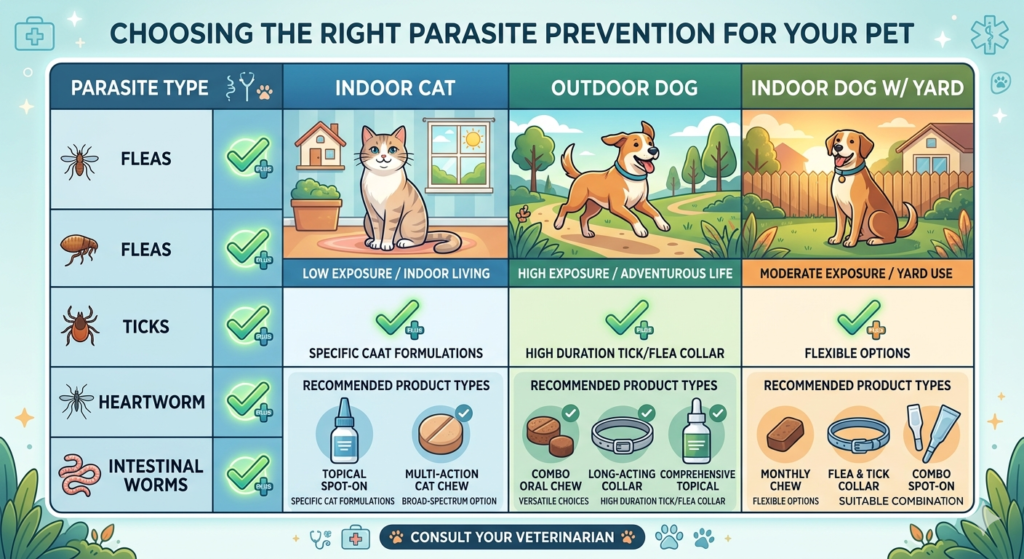
Not all parasite prevention products are the same. Some cover only fleas. Others add heartworm, intestinal worms, or ticks to the spectrum. Choosing the right combination for your pet depends on species (dog vs. cat), lifestyle (indoor vs. outdoor), and which parasites are most relevant to your geographic area.
| Product Type | Fleas | Ticks | Heartworm | Intestinal Worms | Form | Species |
|---|---|---|---|---|---|---|
| Oral isoxazoline (e.g., afoxolaner, fluralaner) | Yes | Yes | No | No | Chewable tablet | Dogs |
| Oral combination (e.g., milbemycin + isoxazoline) | Yes | Yes | Yes | Some | Chewable tablet | Dogs |
| Topical spot-on (e.g., selamectin) | Yes | Limited | Yes | Some | Liquid on skin | Dogs and cats |
| Topical combination (e.g., selamectin + sarolaner) | Yes | Yes | Yes | Some | Liquid on skin | Cats |
| Oral heartworm + intestinal worm only | No | No | Yes | Yes | Chewable tablet | Dogs |
| Injectable heartworm (e.g., moxidectin SR) | No | No | Yes (12 months) | No | Injection by vet | Dogs |
The table above provides a general overview. Your veterinarian will recommend specific products based on your pet’s weight, health history, and risk profile. Dogs that spend time hiking in foothill areas east of Fresno likely need tick coverage that an indoor cat does not. Cats that go outdoors need broader protection than strictly indoor cats, though even indoor cats benefit from monthly parasite prevention for cats because mosquitoes enter homes and fleas hitchhike on clothing and other pets.
Case Study: A Clovis Family’s Close Call With Heartworm
A family in Clovis brought their four-year-old mixed-breed dog, Duke, in after noticing he had become reluctant to play fetch and was coughing after short walks. Duke had been on heartworm prevention as a puppy but the family had stopped purchasing the monthly medication about two years earlier, assuming that because they did not see many mosquitoes around their home, the risk was low.
Bloodwork confirmed Duke was heartworm positive. Chest X-rays revealed enlarged pulmonary arteries and early signs of heart strain. The veterinary team started Duke on a stabilization protocol including exercise restriction, anti-inflammatory medication, and a course of antibiotics before beginning the multi-month treatment process. Duke eventually recovered, but the total treatment timeline stretched over six months, during which he could not run, play, or exercise beyond short leash walks.
The family now keeps both Duke and their two cats on year-round prevention. As Duke’s case illustrates, heartworm-carrying mosquitoes do not need to be visible in large numbers to transmit disease. A single bite from a single infected mosquito is all it takes.
How to Build a Complete Parasite Prevention Plan
Effective pet parasite prevention is not about buying one product and hoping it covers everything. A complete plan accounts for heartworm, fleas, ticks (especially for dogs with outdoor exposure), and intestinal parasites, and includes regular diagnostic testing to confirm prevention is working.
Here is what a solid year-round plan looks like:
- Monthly prevention medication for dogs that covers heartworm, fleas, and ticks, plus an intestinal worm component or a separate dewormer administered quarterly.
- Monthly parasite prevention for cats that covers heartworm, fleas, and intestinal worms at minimum. Cats with outdoor access should have tick protection added.
- Annual heartworm testing for dogs, even those on year-round prevention. No product is 100% effective, and a single missed or late dose can leave a gap.
- Fecal testing once or twice per year to screen for intestinal parasites including giardia and coccidia, which standard preventatives do not cover.
- Environmental management including keeping yards clear of standing water, removing leaf litter where fleas develop, and washing pet bedding regularly.
Your veterinarian can put together a prevention plan tailored to your pet’s species, breed, weight, and lifestyle. For families in Clovis searching for parasite prevention near me, scheduling a wellness visit is the best first step. Bring your pet’s weight, any current medications, and information about their daily routine so the veterinarian can recommend the most appropriate products.
Signs Your Pet May Already Have a Parasite Infection
Even pets on prevention can occasionally pick up parasites, especially intestinal protozoans that standard products do not cover. Watch for these warning signs:
- Persistent scratching, biting at the base of the tail, or hair loss along the back and hindquarters (fleas)
- Visible white segments resembling grains of rice near your pet’s rear end or in their stool (tapeworms, transmitted by fleas)
- Chronic or recurring diarrhea, especially if it contains mucus or blood
- Unexplained weight loss despite a normal appetite
- Coughing, exercise intolerance, or rapid breathing (possible heartworm, especially in dogs with lapsed prevention)
- Pale gums, lethargy, or weakness in puppies and kittens (hookworm anemia)
If you notice any of these, do not wait for the next scheduled appointment. Early diagnosis through bloodwork and fecal testing leads to faster, less complicated treatment and better outcomes. The American Veterinary Medical Association (AVMA) maintains excellent resources on recognizing and responding to parasite infections in household pets.
Protecting Your Family, Not Just Your Pet
Several common pet parasites pose direct health risks to humans, and this is a detail that many pet owners overlook. Roundworm larvae can migrate through human tissue, causing a condition called visceral larva migrans that can affect the eyes, liver, and lungs. Hookworm larvae penetrate human skin and cause itchy, painful tracks as they burrow through the superficial tissue layers. Children, elderly adults, and immunocompromised individuals face the greatest risk.
Keeping your pets on consistent monthly parasite prevention for dogs and cats is one of the single most effective things you can do to protect your entire household. Combined with basic hygiene practices such as washing hands after handling pets, promptly disposing of feces, and keeping sandboxes covered, you dramatically reduce the chance of any family member contracting a zoonotic parasite infection.
Twelve doses a year. That is what stands between your pet and a calendar full of parasites that never take a month off in Clovis.
Frequently Asked Questions About Pet Parasite Prevention
-
Is monthly parasite prevention really necessary in winter?
In Clovis and Fresno, absolutely. Unlike regions with hard freezes, this area experiences mild winters where flea pupae survive in protected environments and mosquitoes emerge during warm spells. Heartworm larvae transmitted in October or November continue developing inside your pet through winter months. Stopping prevention creates a vulnerability window that parasites can exploit, and restarting requires a heartworm test to confirm your pet was not infected during the gap.
-
Can indoor cats skip heartworm prevention?
Indoor cats should still receive monthly parasite prevention for cats that includes heartworm coverage. Mosquitoes enter homes through open doors, windows, and even small gaps around screens. Studies have found that a meaningful percentage of cats diagnosed with heartworm disease were described by their owners as strictly indoor. Because there is no approved heartworm treatment for cats, prevention is the only safeguard. A single infected mosquito indoors is all it takes to put your cat at risk of heartworm-associated respiratory disease.
-
What is the difference between prescription and over-the-counter flea products?
Prescription flea prevention for dogs and cats uses newer active ingredients, particularly isoxazolines, that kill fleas faster, last longer, and offer broader parasite coverage than most over-the-counter options. Many OTC products rely on older pyrethroids that fleas in California have developed resistance to, reducing their real-world effectiveness. Your veterinarian can recommend a prescription product matched to your pet’s species, weight, and health status, which also reduces the risk of adverse reactions from incorrect dosing.
-
How do I know which parasites my pet needs protection against?
Your veterinarian determines this based on species, age, lifestyle, and geographic location. Dogs in the Clovis and Fresno area generally need coverage against heartworm, fleas, ticks, roundworms, hookworms, and whipworms at minimum. Cats need heartworm, flea, roundworm, and hookworm protection. Pets that visit dog parks, hiking trails, boarding facilities, or multi-animal households may need screening for giardia and coccidia as well. A complete prevention plan tailored by a local veterinary team in Clovis accounts for all relevant risk factors.
-
Are flea and tick collars as effective as oral or topical preventatives?
Modern prescription flea and tick collars using newer-generation active ingredients can provide effective long-term protection for dogs, often lasting up to eight months per collar. However, they generally do not cover heartworm or intestinal parasites, so they need to be paired with a separate heartworm and deworming product. Over-the-counter flea collars sold at grocery stores and pet supply shops are significantly less effective and are not a substitute for veterinarian-recommended prevention. For comprehensive flea prevention for dogs, most veterinarians prefer oral or topical products that cover multiple parasite types in a single dose.
-
What should I do if I find a tick on my pet?
Remove the tick as quickly as possible using fine-tipped tweezers. Grasp the tick as close to the skin surface as you can and pull upward with steady, even pressure. Do not twist, crush, or burn the tick. After removal, clean the bite area with rubbing alcohol or soap and water, and save the tick in a sealed bag in case your veterinarian wants to identify the species. Monitor the bite site for redness, swelling, or signs of infection over the following weeks, and watch your pet for symptoms like lethargy, joint stiffness, or loss of appetite that could indicate a tick-borne illness.