
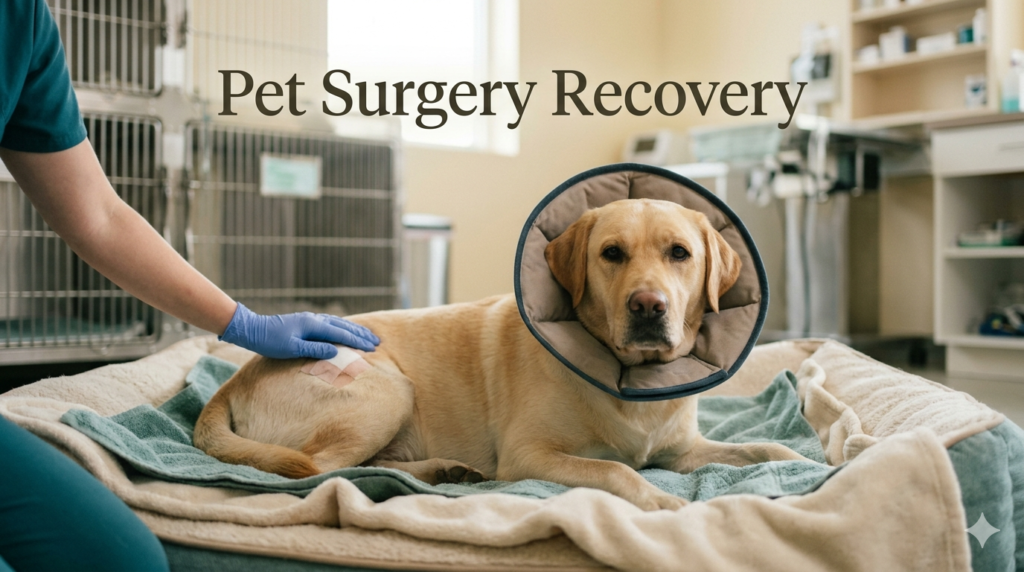
Whether your dog is scheduled for a spay next week or your cat just came home with a row of stitches across her belly, the question that runs through every pet owner’s mind is the same — how long until she is back to normal? At Alta Animal Hospital, pet surgery recovery time is one of the topics we get asked about more than almost anything else, and the honest answer is that “normal” looks different for every procedure, every breed, and every individual patient. A young Lab bouncing back from a routine neuter operates on a different timeline than a senior cat recovering from bladder stone surgery, and understanding what to expect at each stage can make the difference between a smooth recovery and an emergency callback. This guide walks through the most common veterinary surgeries we perform, the realistic healing windows for each, and the warning signs that should send you straight back to the clinic.
Why Pet Surgery Recovery Times Vary
Recovery is not a one-size-fits-all calendar. Two dogs can have the exact same procedure on the same morning and need very different amounts of healing time, and that variability is normal. Several factors shape how quickly any individual pet bounces back, and being honest with yourself about which apply to your pet is the first step in setting realistic expectations.
Factors That Affect Healing Speed
- Age — Young pets generally heal faster than middle-aged adults, and middle-aged adults heal faster than seniors. A puppy spay is back to normal in 10 days; the same surgery on a 12-year-old dog might take three weeks
- Type of surgery — Soft tissue procedures generally heal faster than orthopedic ones. A small lump removal might take a week; an ACL repair takes months
- Pre-existing conditions — Diabetes, kidney disease, obesity, and other health issues slow tissue repair and require modified protocols
- Anesthesia time — Longer procedures mean longer anesthetic exposure, which extends the grogginess phase
- At-home compliance — The single biggest variable we see. Pets who actually rest heal in the textbook window. Pets who keep jumping on the couch take much longer
- Breed-specific factors — Brachycephalic breeds (Bulldogs, Pugs, Persians) often need extra recovery monitoring due to airway concerns
According to the American College of Veterinary Surgeons, most routine soft-tissue surgeries follow a predictable healing curve when post-operative instructions are followed correctly. The variability comes almost entirely from the home environment. Modern pain control protocols, outlined in the AAHA pain management guidelines, have also significantly shortened the discomfort phase compared to surgeries performed even a decade ago.
Common Pet Surgeries and What They Involve
Below are the procedures we perform most often in our pet surgical procedures suite, with realistic recovery expectations for each. None of these timelines are guarantees — they are typical ranges based on healthy patients with good aftercare.
Spay and Neuter Surgery
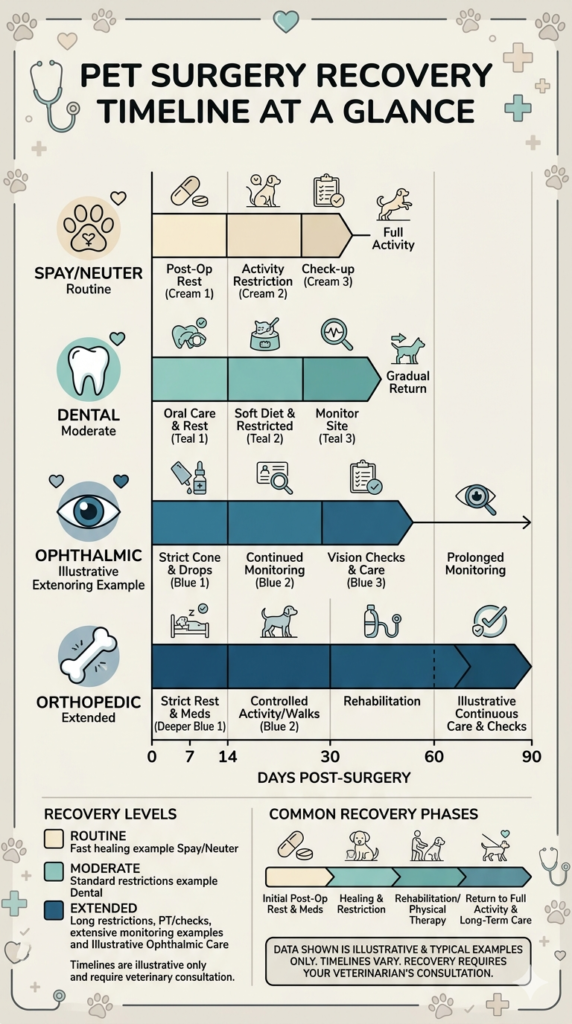
The most common surgical procedure in small animal medicine. Spays remove the female reproductive organs through an abdominal incision; neuters remove the testicles through a much smaller scrotal or pre-scrotal incision. Spays take 30 to 90 minutes, neuters take 15 to 45 minutes, and most pets go home the same day. Recovery runs about 10 to 14 days for spays and 5 to 10 days for neuters, with strict activity restriction for the full two weeks regardless of how energetic your pet looks. We cover the procedural detail in depth in our guide to spay and neuter surgery.
Dental Surgery and Tooth Extractions
Dental procedures range from routine ultrasonic cleanings to surgical extractions of fractured or diseased teeth. Most pets need full anesthesia for proper dental work, which surprises a lot of owners — there is simply no way to scale below the gumline or extract a tooth on an awake patient. Routine cleaning recovery is overnight; surgical extractions typically heal in 7 to 14 days. Soft food is usually required for one to two weeks. Our pet dentistry team uses digital dental X-rays to catch problems below the gumline that would otherwise be missed entirely.
Mass and Tumor Removal
Lumps, bumps, cysts, and tumors are evaluated through fine needle aspiration first when possible, then surgically removed if indicated. Recovery depends on the size and location of the mass and whether margins were taken for a suspected malignancy. Small skin masses heal in 10 to 14 days; large masses requiring deeper tissue dissection may take three to four weeks. Histopathology results typically come back within seven to ten days and inform any follow-up recommendations. The AVMA’s pet care resources include helpful background on what to expect when a lump is sent for biopsy.
Foreign Body Removal
When a dog swallows a sock or a cat ingests a hair tie, the foreign object can lodge in the stomach or intestines and cause an obstruction. Surgery to remove it is one of the more urgent procedures we handle. If the bowel wall is healthy, recovery runs 10 to 14 days. If a section of intestine had to be resected and reconnected, the timeline extends to three weeks with strict feeding modifications. This is one of the procedures where catching it early makes the biggest difference in outcomes.
Cruciate Ligament Repair
Cranial cruciate ligament rupture is the canine equivalent of a torn ACL in humans, and it is the most common orthopedic surgery in dogs. Recovery is genuinely long compared to soft tissue procedures — eight to twelve weeks of progressively increasing activity, formal rehabilitation exercises, and strict leash-only walks. Some patients return to full athletic function; others maintain a measured baseline. Patience and physical therapy compliance are the deciding factors. The Cornell Riney Canine Health Center publishes useful information for owners navigating long orthopedic recoveries.
Bladder Stone Removal (Cystotomy)
Stones forming in the bladder can cause painful urination, blood in the urine, or complete obstruction (a true emergency, especially in male cats). Cystotomy involves opening the bladder, removing the stones, and closing in multiple suture layers. Recovery takes about 10 to 14 days, with dietary changes often required long-term to prevent recurrence. Stones are sent for analysis to determine the mineral composition and guide future prevention.
Cesarean Section
Performed when natural delivery becomes complicated or when the breed makes natural birth high risk (most brachycephalic breeds). The mother typically recovers in 10 to 14 days, but she also has to nurse a litter during that window, which complicates rest in obvious ways. Close monitoring of the incision is critical because nursing puppies climb everywhere they should not.
Eye Surgery
Procedures range from cherry eye correction and entropion repair to enucleation (eye removal) for severe trauma or end-stage glaucoma. Most heal in 10 to 14 days but require an Elizabethan collar for the full recovery — pets that scratch or rub the surgical site can undo the entire procedure in a matter of seconds.
Pet Surgery Recovery Time: At-a-Glance Comparison
| Surgery Type | Typical Recovery | Activity Restriction | Suture Removal |
|---|---|---|---|
| Neuter (Male) | 5 to 10 days | 14 days | 10 to 14 days |
| Spay (Female) | 10 to 14 days | 14 days | 10 to 14 days |
| Dental Cleaning | 24 hours | 1 to 2 days | N/A |
| Dental Extraction | 7 to 14 days | 7 days, soft food | N/A |
| Mass Removal (small) | 10 to 14 days | 14 days | 10 to 14 days |
| Foreign Body | 10 to 21 days | 14 to 21 days | 10 to 14 days |
| Cruciate Repair | 8 to 12 weeks | 8 to 12 weeks | 10 to 14 days |
| Bladder Stones | 10 to 14 days | 14 days | 10 to 14 days |
| C-Section | 10 to 14 days | 14 days | 10 to 14 days |
| Eye Surgery | 10 to 14 days | 14 days, cone required | 7 to 10 days |
The Standard Pet Surgery Recovery Stages
Most procedures follow a predictable healing curve, even if the absolute timeline differs. Knowing what each stage looks like helps you spot when something is off.
First 24 Hours: The Anesthesia Phase
Your pet comes home groggy. Coordination is impaired, appetite is reduced, and most pets sleep heavily through the first night. Pain medication starts on schedule and continues without missed doses. A small amount of clear fluid drainage from the incision is normal; bleeding is not. Vomiting once after coming home from anesthesia happens; repeated vomiting warrants a phone call.
Days 2 to 7: The Acute Healing Phase
This is when the incision starts knitting together and inflammation begins to settle. Pets often start feeling better than they actually are during this stage, which is exactly the danger zone. The cone stays on. Activity stays limited to leash walks for bathroom only. The incision should look progressively less red, less swollen, and more closed each day.
Days 8 to 14: The Strengthening Phase
Surface tissue is largely closed, but internal sutures are still doing their structural job. Skin sutures or staples (if used) are typically removed at the two-week recheck. Activity restrictions remain in place until your veterinarian clears your pet at that visit.
Beyond Two Weeks: The Return-to-Normal Phase
For most soft tissue surgeries, this is when you can start gradually reintroducing normal activity. For orthopedic procedures, this is just the beginning of a much longer rehabilitation arc that may include physical therapy, hydrotherapy, and structured exercise plans.
Warning Signs During Pet Surgery Recovery
Some level of mild discomfort, reduced appetite, and decreased energy is normal in the first 48 hours. The signs below are not normal and warrant a call to your veterinarian or, after hours, an urgent care visit:
- Active bleeding from the incision (a few drops of blood-tinged fluid is fine; ongoing red blood is not)
- Heat, severe swelling, or pus discharge from the surgical site
- Vomiting or refusing food beyond 24 hours post-surgery
- Lethargy that worsens instead of improving after the first day
- Crying out, panting, or trembling that does not respond to prescribed pain medication
- A gap or opening in the incision (called dehiscence — requires immediate attention)
- Difficulty urinating or defecating beyond the first 24 to 48 hours
We cover what counts as a true emergency in our companion guide on the signs your pet needs emergency vet care.
How to Set Up a Recovery Space at Home
The right setup before you bring your pet home makes a measurable difference in healing speed. A few practical recommendations:
- Pick one quiet room — Ideally a bedroom or laundry room with minimal foot traffic and no stairs
- Confine when unsupervised — A crate, exercise pen, or small room prevents zoomies that pull stitches
- Remove furniture access — Block couches and beds with baby gates or cushions on the floor
- Use the cone consistently — Most incision openings happen during the 30 seconds the cone was off “just for dinner”
- Schedule short, frequent bathroom breaks — On a leash, even for indoor cats if needed
- Stock up on the right food — Soft food for dental patients; bland diet for foreign body recovery; whatever the discharge instructions specify
Senior pets, in particular, benefit from extra padding underfoot since their balance is less reliable post-anesthesia. Our senior pet care protocols include modified recovery recommendations for older patients.
Real Patient Story: Max’s Foreign Body Surgery
Max, a four-year-old Boxer from Clovis, came in on a Saturday morning after his owner noticed he had not kept anything down for over 24 hours. He was lethargic, his abdomen was tender, and his owner mentioned offhandedly that Max had a habit of eating things he should not. Pre-surgical imaging through our diagnostic imaging revealed a clear obstruction in the small intestine. Surgery began within two hours of his arrival. The culprit turned out to be a tennis ball cover that had been swallowed days earlier and finally lodged where it could no longer pass. The bowel wall was bruised but healthy, so no resection was needed, and Max was closed and recovering within an hour.
His owner stuck to the recovery plan religiously — small bland meals, no stairs, leash walks only, and the cone stayed on for the full two weeks. By his recheck appointment, the incision had healed cleanly and Max was back to his usual energy level. The lesson Max’s case illustrates is one we repeat constantly: catching a foreign body early, getting to surgery quickly, and following the aftercare plan to the letter is what turns a potentially life-threatening emergency into a routine recovery story. We see this exact pattern in our practice repeatedly, and the patients who do best are always the ones whose owners take the post-op instructions seriously.
Final Thoughts
Pet surgery recovery time is shaped by a combination of the procedure itself, the individual patient, and the discipline of the household. The most successful recoveries we see are not the ones where everything went perfectly during surgery — most surgeries go well — they are the ones where the family follows the discharge instructions, watches for warning signs, and calls the clinic with questions instead of waiting and hoping. Whether your pet is facing a routine procedure or something more complex, the path forward is almost always more predictable than it feels in the moment.
If you have a procedure scheduled or you are weighing whether your pet needs surgery, our team in Clovis is here to walk you through every stage.
Frequently Asked Questions
-
How long does it take a dog to recover from surgery?
Most dogs recover from routine soft tissue surgery in 10 to 14 days, with full activity restriction throughout that window. Smaller procedures like neuters trend toward the shorter end (5 to 10 days), while orthopedic procedures like cruciate repair extend recovery to 8 to 12 weeks. Senior dogs, large breeds, and patients with underlying health conditions typically need additional healing time. Following discharge instructions exactly is the single biggest factor in staying within the predicted recovery window.
-
Can I leave my pet alone after surgery?
For the first 24 hours after anesthesia, your pet should not be left completely alone. Someone should check in every few hours to monitor for vomiting, breathing difficulty, or signs of pain. After the first day, short periods alone (two to four hours) are typically fine if your pet is confined to a recovery space with no access to stairs, furniture, or chewable hazards. The cone stays on the entire time, regardless of supervision.
-
Why does my pet seem fine after surgery but I still have to restrict activity?
This is the most counterintuitive part of recovery. Surface tissue heals quickly, so within a few days your pet often looks and acts completely normal. But internal tissue layers — muscle, fascia, and deeper sutures — are still actively healing for the full two weeks. Vigorous activity during this window can rupture internal sutures, cause bleeding, or open the incision from the inside out. Activity restriction protects the healing you cannot see.
-
What should I feed my pet after surgery?
Most pets resume their normal diet within 12 to 24 hours after coming home, often starting with a smaller portion of their regular food. For dental procedures with extractions, soft food is required for one to two weeks. For foreign body or gastrointestinal surgery, a bland diet (boiled chicken and rice, or a prescription recovery diet) is typical for several days before transitioning back. Always follow the specific discharge instructions provided.
-
When should I call the vet during my pet’s surgery recovery?
Call right away for active bleeding, persistent vomiting beyond 24 hours, severe lethargy, signs of significant pain, an open or gaping incision, heat or pus at the surgical site, difficulty breathing, or any inability to urinate. Do not wait to see if it gets better on its own. A quick phone call almost always costs less than a delayed visit, and our team would rather hear from you over a small concern than have you arrive with a larger problem hours later.
-
Does pet age change the surgery recovery timeline?
Yes, age has a meaningful effect on healing. Puppies and kittens recover quickly because their tissue regenerates rapidly. Adult pets follow standard timelines. Senior pets generally need longer recovery windows because slower metabolism, reduced collagen production, and frequently coexisting conditions like arthritis or kidney disease all extend healing. Pre-surgical bloodwork and a tailored anesthesia protocol help mitigate these factors, but realistic expectations matter — a senior dog’s spay recovery may take three weeks instead of two.