
Vaccinating a pet on the correct schedule is one of the simplest, most effective ways to prevent serious and sometimes fatal disease. Yet many pet owners in the Central Valley are unsure which shots are actually required, which are optional, and how the timeline changes for a fast-growing puppy versus an adult cat that mostly stays indoors. This guide breaks down the full dog and cat vaccination schedule, explains the difference between core and non-core vaccines by species, and covers what California law specifically requires for rabies protection. If you are searching for dog vaccines near me or trying to figure out when your kitten’s next round of shots is due, Alta Animal Hospital in Clovis has put together this complete reference.
Why Vaccination Timing Actually Matters
Puppies and kittens are born with some protection passed down through their mother’s milk, called maternal antibodies. That protection fades gradually over the first several weeks of life, and the exact timing varies from one litter to the next. This creates a tricky window: too early, and the leftover maternal antibodies can interfere with the vaccine and block it from working. Too late, and the puppy or kitten is left vulnerable to disease with no protection at all.
This is exactly why veterinarians do not give a single shot and call it done. Instead, young pets receive a series of vaccinations spaced a few weeks apart, so that at least one dose lands in the window after maternal antibodies fade but before exposure risk rises. Skipping doses or spacing them incorrectly can leave real gaps in protection, even if the pet “technically” received their shots.
Adult pets need boosters too, though on a much less frequent schedule. Immunity from some vaccines fades over time, and periodic boosters keep protection at a reliable level throughout your pet’s life.
Core vs Non-Core Vaccines: What Is the Difference
Veterinary vaccines fall into two broad categories, and understanding the distinction helps explain why your vet may recommend different shots for different pets. The American Veterinary Medical Association and the American Animal Hospital Association both publish core vs non-core vaccine guidelines that most veterinary practices, including ours, follow closely.
Core vaccines are recommended for essentially every dog or cat, regardless of lifestyle, because the diseases they prevent are widespread, highly contagious, or dangerous to public health. Rabies is the clearest example and the only vaccine mandated by California law for dogs.
Non-core vaccines are recommended selectively, based on a pet’s individual risk factors such as boarding, dog park visits, hunting, exposure to wildlife, or geographic location. A dog that never leaves a fenced backyard has a very different risk profile than one that visits the dog park daily or travels with the family on camping trips.
Your veterinarian’s job during a wellness visit is to match your pet’s actual lifestyle to the right combination of core and non-core protection, rather than applying a blanket protocol to every animal that walks through the door.
Core and Non-Core Vaccines for Dogs
Core Dog Vaccines
- Rabies — required by California law; protects against a fatal viral disease transmissible to humans
- DHPP (Distemper, Hepatitis, Parainfluenza, Parvovirus) — a combination vaccine protecting against several severe, often fatal viral diseases
Non-Core Dog Vaccines
- Bordetella (kennel cough) — recommended for dogs that board, attend daycare, or visit dog parks
- Canine influenza — recommended for dogs with regular exposure to other dogs in group settings
- Leptospirosis — recommended for dogs with exposure to standing water, wildlife, or rural environments
- Lyme disease — recommended based on regional tick exposure risk
Core and Non-Core Vaccines for Cats
Core Cat Vaccines
- Rabies — a fatal viral disease; recommended for all cats, including indoor-only cats, since bats and other wildlife can occasionally enter homes
- FVRCP (Feline Viral Rhinotracheitis, Calicivirus, Panleukopenia) — a combination vaccine protecting against common, highly contagious respiratory and intestinal viruses
Non-Core Cat Vaccines
- Feline Leukemia Virus (FeLV) — strongly recommended for kittens and any cat with outdoor access or exposure to unknown cats
- Feline Immunodeficiency Virus (FIV) — considered based on exposure risk, typically for cats that go outdoors or live with FIV-positive cats
- Chlamydia and Bordetella — considered for cats in multi-cat households, shelters, or catteries
The American Association of Feline Practitioners maintains detailed feline vaccination guidelines that many veterinary hospitals reference when building a cat-specific protocol.
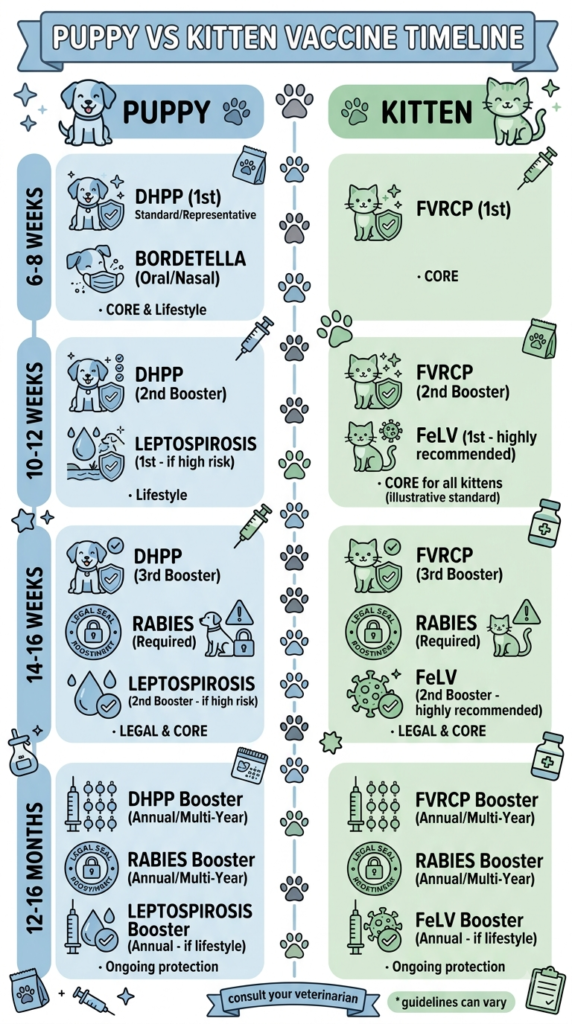
Puppy Vaccination Schedule by Age
| Puppy Age | Vaccines Typically Given |
|---|---|
| 6–8 weeks | First DHPP dose |
| 10–12 weeks | Second DHPP dose; Bordetella if indicated |
| 14–16 weeks | Third DHPP dose; Rabies (first dose) |
| 12–16 months | DHPP booster; Rabies booster |
| Every 1–3 years thereafter | DHPP and Rabies boosters based on vaccine label and lifestyle |
Puppy shots near me searches often come from new owners trying to understand why their puppy needs to return to the vet multiple times in just a few months. The short answer is that each visit in the series is closing a different window of vulnerability, and missing a dose can mean starting part of the series over.
Kitten Vaccination Schedule by Age
| Kitten Age | Vaccines Typically Given |
|---|---|
| 6–8 weeks | First FVRCP dose |
| 10–12 weeks | Second FVRCP dose; FeLV testing and first dose if indicated |
| 14–16 weeks | Third FVRCP dose; Rabies (first dose); FeLV second dose if started |
| 12–16 months | FVRCP booster; Rabies booster |
| Every 1–3 years thereafter | FVRCP and Rabies boosters based on vaccine label and lifestyle |
Kitten vaccines follow a similar staged logic to puppies. Because FeLV is spread through close contact between cats, testing before starting that vaccine series is an important step that a responsible veterinary team should never skip.
Adult Dog and Cat Vaccination Schedule
Once the initial puppy or kitten series and the one-year booster are complete, most adult dogs and cats move to a maintenance schedule. Depending on the specific vaccine and product label, this typically means:
- Rabies: every one to three years, depending on the vaccine used and local requirements
- DHPP (dogs) or FVRCP (cats): every one to three years, based on vaccine label and risk assessment
- Non-core vaccines: annually, if lifestyle risk factors are still present
An annual wellness exam is the right time to review your pet’s current lifestyle and confirm which boosters are actually due, rather than automatically repeating every vaccine every year regardless of need.
California’s Rabies Vaccination Law
Unlike most other vaccines, rabies protection is not just a medical recommendation in California, it is a legal requirement. Under California Health and Safety Code Section 121690, every dog must be vaccinated against rabies by four months of age, with a booster one year after the initial dose and revaccination every three years thereafter using an approved three-year labeled vaccine. The California Department of Public Health officially declares the entire state a rabies area, so this requirement applies to dog owners in every county, including Fresno County. Rabies vaccination is also generally a prerequisite for obtaining a dog license through the county.
While state law specifically targets dogs, veterinarians strongly recommend rabies vaccination for cats as well, since bats and other wildlife are the primary rabies vectors in California and can occasionally make contact with cats that spend any time outdoors, or even indoor cats through an open window or screen.
Senior Pet Vaccination Considerations
Older dogs and cats still need core vaccine protection, but the conversation shifts slightly. A veterinarian will weigh a senior pet’s overall health status, any chronic conditions, and immune function when deciding on booster timing. Senior pets benefit from having vaccination discussions folded into a broader wellness visit that also screens for age-related conditions, rather than treating the vaccine appointment as a standalone errand.
Lifestyle Risk Factors That Change the Vaccine Plan
No two pets need the exact same vaccine protocol. A veterinarian will typically ask about the following before finalizing a plan:
- Does the pet go to a dog park, daycare, boarding facility, or groomer regularly
- Does the pet have any outdoor access, even supervised
- Does the household include multiple pets with different exposure histories
- Does the family travel with the pet, particularly to rural areas, wooded regions, or out of state
- Is the pet regularly around wildlife, standing water, or unknown animals
Answering these questions honestly during a wellness exam helps your veterinarian recommend only the vaccines your pet actually needs, avoiding both under-protection and unnecessary shots.
Patient Case Study: Bella’s Delayed Puppy Series
A Clovis family adopted Bella, a mixed-breed puppy, at nine weeks old from a local rescue. The rescue’s paperwork showed only one prior vaccine dose with no clear record of timing. Rather than assuming Bella was current, the veterinary team at Alta Animal Hospital restarted a full puppy series based on her age and unclear history, spacing three DHPP doses appropriately and adding her first rabies vaccine at fourteen weeks per label guidelines.
At Bella’s twelve-month wellness visit, bloodwork and a physical exam confirmed she was healthy and had responded well to the series, and she moved onto a standard adult booster schedule from that point forward. Her case is a reminder that when vaccination history is uncertain, restarting a proper series is safer than assuming partial protection is enough, especially for a puppy with an unknown background.
Comparison: Core vs Non-Core Vaccines at a Glance
| Factor | Core Vaccines | Non-Core Vaccines |
|---|---|---|
| Who needs them | Nearly all dogs and cats | Pets with specific risk factors |
| Example diseases | Rabies, DHPP, FVRCP | Bordetella, Leptospirosis, FeLV, FIV |
| Legal requirement | Rabies mandated by CA law for dogs | Not legally mandated |
| Decided by | Standard veterinary recommendation | Lifestyle and exposure risk assessment |
| Typical frequency | Every 1–3 years after initial series | Often annual if risk factors persist |
What Happens If You Fall Behind on the Schedule
Life gets busy, and it is common for a booster to slip past its due date. If a vaccine lapses, your veterinarian will assess how much time has passed and your pet’s current health before deciding whether a single booster is sufficient or whether part of the series needs to be repeated. Falling behind does not automatically mean starting completely over, but it does mean the visit should not be skipped or delayed indefinitely. If your pet shows any signs of illness after a missed vaccine and possible exposure, urgent same-day care is available rather than waiting for the next routine opening.
Booking a Vaccine Appointment in Clovis
Whether you are bringing home a new puppy, adopting a kitten, or simply catching up on an adult pet’s boosters, the team at Alta Animal Hospital builds a vaccination plan around your individual pet rather than a one-size-fits-all checklist. You can book a vet appointment online, and our meet the team page has more on the veterinarians and staff who will be caring for your pet.
A vaccination schedule followed consistently, not just started, is what actually keeps a pet protected for life.
Frequently Asked Questions
-
How often do dogs and cats need vaccine boosters?
Most core vaccine boosters are given every one to three years depending on the specific product label and your pet’s individual risk assessment. Rabies boosters in California typically follow a three-year schedule after the initial series is complete, while some other core vaccines may be recommended annually or every three years. Your veterinarian will confirm the correct interval based on which vaccine brand was used and your pet’s documented history.
-
What is the difference between core and non-core vaccines?
Core vaccines protect against diseases that are widespread, highly contagious, or dangerous enough that nearly every dog or cat should receive them, such as rabies and distemper. Non-core vaccines are recommended selectively based on a pet’s actual lifestyle and exposure risk, such as Bordetella for dogs that board or attend daycare, or FeLV for cats with outdoor access. A veterinarian tailors the non-core portion of the plan to each individual pet.
-
Is the rabies vaccine legally required in California?
Yes, for dogs. California Health and Safety Code Section 121690 requires every dog to be vaccinated against rabies by four months of age, with a booster one year later and revaccination every three years after that using an approved vaccine. While the law specifically targets dogs, veterinarians commonly recommend rabies vaccination for cats too, since wildlife exposure remains a real risk even for cats that spend limited time outdoors.
-
When should my puppy or kitten start their vaccine series?
Most puppies and kittens begin their core vaccine series between six and eight weeks of age, with additional doses given roughly every three to four weeks until they reach around fourteen to sixteen weeks old. This staged approach accounts for fading maternal antibodies and ensures there is no unprotected gap. Starting the series on schedule and completing every dose is far more important than the exact starting age.
-
Do indoor-only cats still need vaccines?
Yes. Core vaccines, including rabies and FVRCP, are still recommended for indoor-only cats because exposure can happen in unexpected ways, such as a bat entering through an open window or an escaped cat encountering another animal outdoors. Non-core vaccines like FeLV are typically reserved for cats with actual outdoor access or exposure to other cats, so an indoor cat’s plan will usually be lighter than an outdoor cat’s plan.
-
Can vaccines be combined with a regular wellness exam?
Yes, and this is generally the recommended approach. Combining vaccinations with a wellness exam allows your veterinarian to evaluate your pet’s overall health, run any needed bloodwork, and confirm the vaccine plan still matches your pet’s current lifestyle, all in a single visit rather than multiple separate trips to the clinic.