
Bringing home a new dog, cat, rabbit, or bird is exciting, and it also comes with a long list of unknowns, starting with that first vet visit in Clovis. New pet owners often show up without records, without a list of questions, and without a clear sense of what the visit will actually cover. This checklist walks through exactly what to bring, what your veterinarian will check, the vaccine and preventive care timeline for each species, and how to plan ahead for milestones like microchipping and spay or neuter surgery. Alta Animal Hospital sees new pets across every one of these categories every week, and this guide reflects the questions that come up most often.
What to Bring to Your Pet’s First Vet Visit
Walking in prepared saves time and gives your veterinarian a much clearer picture of your pet’s history.
For Dogs and Cats
Bring any adoption or breeder paperwork, prior vaccination records if your pet came from a shelter or previous home, a fresh stool sample if possible for a parasite screen, and a list of any food, treats, or supplements your pet is currently eating. If your dog or cat came from a rescue, mention any known behavioral notes so your vet can plan the exam around your pet’s comfort level.
For Rabbits and Birds
Rabbits and birds need the same level of preparation but with a few extra details. Note your rabbit’s current hay, pellet, and vegetable diet, since nutrition drives most rabbit health issues. For birds, bring information on cage size, diet, and any recent changes in droppings, feather condition, or vocalization, since these are often the first visible signs something is off. Alta Animal Hospital treats dogs, cats, rabbits, pocket pets, and birds, so first visits for exotic and small companion animals follow the same thorough process as a routine dog or cat check up.
Questions to Ask at Your First Appointment
A good first visit is a two-way conversation. Consider asking:
- What vaccines does my pet need now, and what is the full schedule going forward?
- Based on my pet’s breed, age, and lifestyle, what parasite prevention plan do you recommend?
- When should we discuss spay or neuter timing?
- What is a healthy weight and body condition for my specific pet?
- What symptoms should prompt an immediate call rather than waiting for the next scheduled visit?
- Do you offer in-house diagnostics, or would bloodwork need to be sent to an outside lab?
Vaccine Timeline by Species
Vaccine schedules vary significantly by species, and getting the timing right during the first year matters more than at any other stage of your pet’s life.
Puppy and Kitten Vaccine Schedule
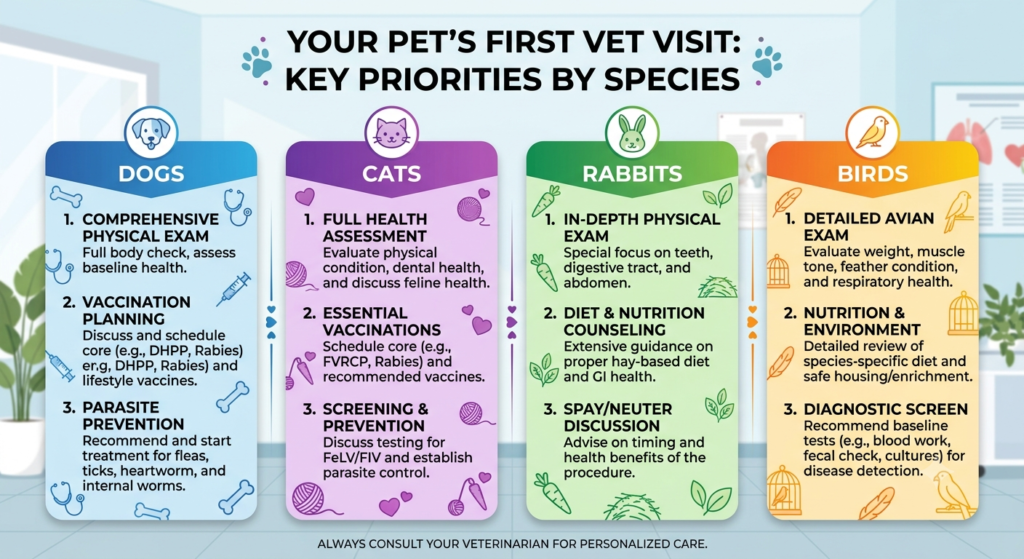
Puppies and kittens typically begin their vaccine series between six and eight weeks of age, with boosters every three to four weeks until they reach sixteen weeks old, following core vaccination timelines published by the American Veterinary Medical Association. Core vaccines for dogs include rabies, distemper, parvovirus, and adenovirus, while core vaccines for cats include rabies, feline viral rhinotracheitis, calicivirus, and panleukopenia. Lifestyle vaccines, such as Bordetella for dogs that board or attend daycare, are added based on individual risk.
Rabbit and Bird Preventive Care Basics
Rabbits in the United States generally do not require core vaccines the way dogs and cats do, though your veterinarian will check for dental issues, GI motility, and parasites at every visit, since these problems progress quickly in rabbits, a pattern well documented by the House Rabbit Society. Birds benefit most from an initial wellness exam that includes a physical assessment, a weight baseline, and a conversation about diet, since poor nutrition is the single most common health issue seen in pet birds according to guidance from the Association of Avian Veterinarians.
| Species | Ideal First Visit Age | Core Early Priorities |
|---|---|---|
| Dogs | 6 to 8 weeks | Vaccine series, deworming, growth tracking |
| Cats | 6 to 8 weeks | Vaccine series, deworming, parasite screen |
| Rabbits | As soon as adopted | Dental check, GI health, diet review |
| Birds | As soon as adopted | Weight baseline, diet review, physical exam |
Microchipping: Why It Matters From Day One
A new pet is at the highest risk of getting lost during the first few months in a new home, before routines and boundaries are established. Microchipping at the first visit means your pet has permanent identification in place from the very start, rather than waiting until after a scare. The procedure takes only a few minutes and does not require sedation for dogs or cats.
Planning Ahead: Spay and Neuter, Parasite Prevention, and Nutrition
Your first visit is also the right time to start planning for milestones that come up in the following months. If you already know you plan to spay or neuter your dog or cat, our spay and neuter guide for Clovis pet owners breaks down what to expect at each stage, from pre-surgical bloodwork through recovery. Year-round parasite prevention is another topic worth settling early, since the Central Valley climate does not have a true flea and tick off-season and the Companion Animal Parasite Council recommends year-round protection for exactly this reason. Our full guide to flea and tick prevention covers safe, species-specific options for dogs and cats. Nutrition rounds out the first-visit conversation. Ask your veterinarian to help you establish a baseline body condition score and an appropriate feeding plan, since this early guidance is far easier to follow than correcting a weight problem years later.
Case Study: Kiwi the Rescue Cockatiel’s First Visit
A Clovis family adopted Kiwi, a young cockatiel, from a local rescue and brought her in within a week for her first exam. She looked bright and active at home, but the physical exam revealed a body weight slightly below the healthy range for her species, along with a diet consisting almost entirely of seed mix. Her new owners had no way of knowing this was a problem, since Kiwi’s energy and behavior seemed completely normal. The veterinary team walked them through a gradual pellet transition plan and a follow-up weigh-in schedule to track her progress. Within a month, Kiwi’s weight had climbed into a healthier range, and her feather condition visibly improved. Her case is a good example of why a first exam matters even when a pet seems perfectly fine on the surface, since some of the most common issues in birds and rabbits are invisible without a hands-on check.
Choosing a Full-Service Vet Clinic Near You in Clovis
Not every practice that shows up under a vet clinic near me search treats the full range of species a growing family might bring home. Ask directly whether a clinic sees dogs, cats, rabbits, and birds, or only the first two. Our comparison of a full-service vet clinic versus a smaller practice covers the practical differences worth understanding before you commit to a long-term provider. Learn more about our Clovis veterinary team and the range of species and life stages we care for under one roof.
A first vet visit sets the tone for years of care that follows, and a little preparation on your part makes that very first appointment far more productive for both you and your new companion.
Frequently Asked Questions
-
How old should my puppy or kitten be for their first vet visit?
Most puppies and kittens should see a veterinarian between six and eight weeks of age, often shortly after adoption. This first visit typically includes a physical exam, the start of the core vaccine series, and a parasite screening. Earlier visits are appropriate if you notice any signs of illness, regardless of the standard age guideline.
-
Do rabbits and birds need the same vaccines as dogs and cats?
No, rabbits and birds in the United States generally do not follow a core vaccine schedule the way dogs and cats do. Instead, their first visits focus on a thorough physical exam, dental assessment for rabbits, weight and nutrition review, and parasite screening. Your veterinarian will recommend species-specific preventive steps based on your pet’s individual risk factors.
-
What should I bring to my pet’s first vet appointment?
Bring any prior medical or adoption records, a list of current food and supplements, and a fresh stool sample if you can collect one. For rabbits and birds, note the current diet in detail, since nutrition plays a major role in their overall health. The more information you provide, the more personalized your veterinarian’s recommendations can be.
-
When should I microchip my new pet?
Most veterinarians recommend microchipping at the first visit, since new pets are statistically more likely to get lost during their first few months in an unfamiliar home. The procedure is quick and does not require sedation for dogs and cats. Having permanent identification in place from day one removes one major source of risk early on.
-
How do I know if a vet clinic is truly full-service?
Ask directly whether the practice treats the specific species you have, offers in-house diagnostics, and provides both preventive and surgical care under one roof. A full-service veterinary hospital typically handles everything from routine wellness exams to same-day urgent care and surgical procedures, rather than referring out routine work to outside specialists.
-
When should I start planning for my pet’s spay or neuter surgery?
It’s worth bringing up spay or neuter timing at your very first visit, even if the actual surgery is still months away. Most veterinarians recommend the procedure around four to six months of age for dogs and cats, though breed and size can shift that timeline. Discussing it early gives you time to prepare rather than scheduling it last minute.