
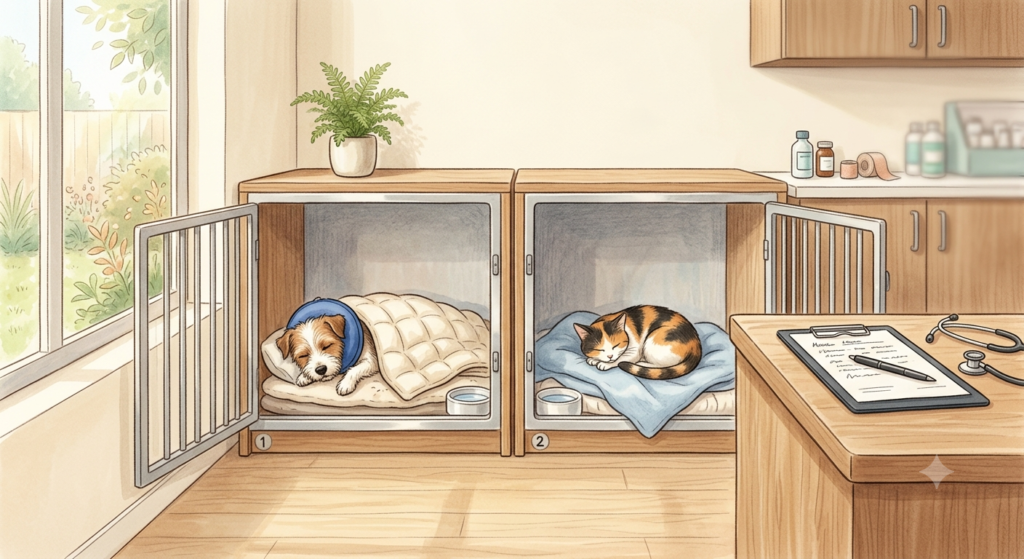
Booking spay and neuter in Clovis for the first time brings up a lot of questions, and most pet owners walk into that first consultation without a clear picture of what actually happens on surgery day. If you searched for a spay and neuter clinic near me and landed here, this guide walks through the procedure itself, how male and female recovery differs, what to expect at each stage of healing, and the questions worth asking before you commit to a date. Alta Animal Hospital has walked hundreds of Clovis families through this exact decision, and the goal here is to replace guesswork with a clear plan.
What Spay and Neuter Surgery Actually Involves
The terms get used interchangeably, but they describe two distinct surgeries performed on opposite sexes.
Spaying: The Procedure for Female Dogs and Cats
Spaying, technically called an ovariohysterectomy, removes a female pet’s ovaries and uterus through a small abdominal incision. Because the surgeon is working inside the abdominal cavity, this is considered the more involved of the two procedures. It requires general anesthesia, careful tissue handling, and a longer closure process involving multiple suture layers. Recovery reflects that added complexity, which is why timeline expectations differ from what male pets experience.
Neutering: The Procedure for Male Dogs and Cats
Neutering, or castration, removes a male pet’s testicles through a smaller incision near the scrotum. Since the surgical site sits outside the abdominal cavity, the procedure is typically faster and involves a shorter anesthesia window. That does not make it minor. Anesthesia risk, pain management needs, and the importance of a controlled recovery environment apply just as much to a neuter dog near me appointment as they do to a full spay.
Male vs Female: Key Differences Before You Book
Pet owners often assume the two surgeries are nearly identical. In practice, several factors differ enough to shape how you plan the weeks around surgery.
| Factor | Spay (Female) | Neuter (Male) |
|---|---|---|
| Surgical site | Abdominal incision | Scrotal or pre-scrotal incision |
| Typical surgery length | 30 to 90 minutes | 15 to 45 minutes |
| Anesthesia complexity | Higher, longer duration | Lower, shorter duration |
| Typical recovery window | 10 to 14 days | 5 to 10 days |
| Activity restriction | Strict, full two weeks | Firm, though slightly shorter |
| Common home care focus | Incision monitoring, no jumping | Incision monitoring, no running |
These are general ranges. Breed, age, weight, and overall health all influence where a specific pet falls within them, which is exactly why a pre-surgical exam matters more than a generic timeline.
Preparing Your Dog or Cat for Surgery Day
A smooth recovery starts before your pet ever reaches the surgical suite.
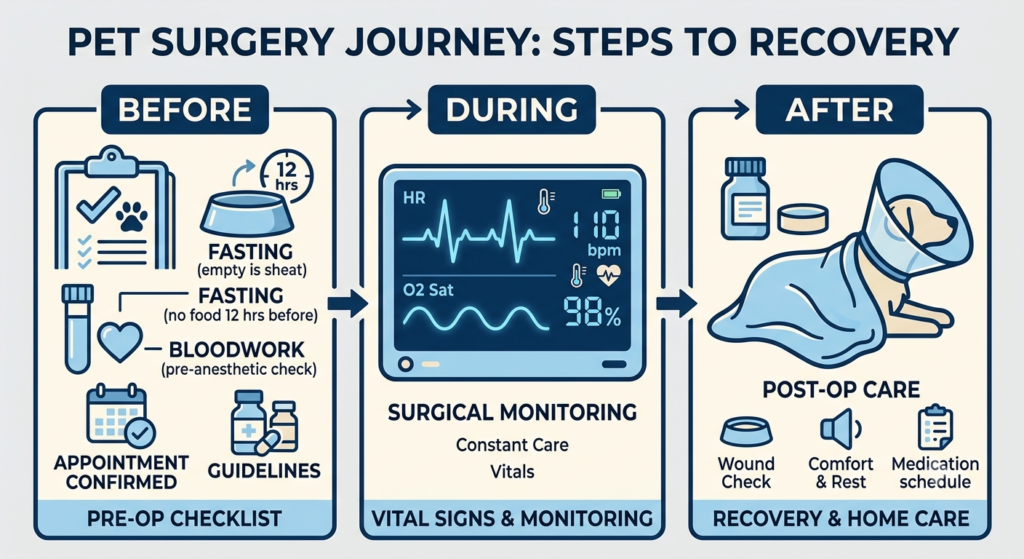
Pre-Surgical Bloodwork and Health Screening
Most veterinary teams recommend a pre-anesthetic blood panel before any spay or neuter procedure, a practice consistent with anesthesia guidance from the American Veterinary Medical Association. This checks organ function, confirms your pet can safely process anesthesia, and flags any underlying issue that might change the surgical plan. A clinic offering in-house diagnostics can typically deliver these results the same day, which means fewer delays between your consultation and your scheduled surgery date.
Fasting and Day-Of Instructions
Pets are usually asked to fast overnight before surgery to reduce the risk of complications under anesthesia. Water is generally fine up until a specific cutoff time your veterinary team will confirm. Bring a list of any medications or supplements your pet currently takes, and mention any past reactions to anesthesia, even if it was years ago at a different clinic.
What Happens During the Procedure
Once your pet is checked in, a veterinary team member places an IV catheter for fluids and anesthesia access. Continuous monitoring tracks heart rate, oxygen saturation, blood pressure, and body temperature throughout the surgery. Multi-modal pain management, meaning more than one type of pain control working together, is standard practice at most full-service veterinary hospitals today, following pain management guidance published by the American Animal Hospital Association. After the incision is closed, most pets rest in a quiet recovery kennel until they’re alert enough to stand and walk on their own before heading home.
Recovery Milestones: Day by Day
The First 24 to 48 Hours
Expect grogginess, reduced appetite, and a pet who mostly wants to sleep. This is normal as anesthesia clears the system. Keep your dog or cat in a confined, quiet space away from stairs, other pets, and small children during this window.
Days 3 to 10
Energy typically returns faster than the incision heals, which is where most complications happen. A pet that looks fine will still try to jump, run, or lick at the surgical site. An e-collar or recovery suit and a leash for every outdoor trip, even quick bathroom breaks, prevents the setbacks that turn a routine spay or neuter into an emergency recheck.
Days 10 to 14 and Follow-Up
Most spays reach full healing around the fourteen-day mark, while neuters, following the shorter recovery pattern described above, often clear activity restrictions closer to day seven to ten. These ranges align closely with healing curves described by the American College of Veterinary Surgeons for routine soft-tissue procedures. A follow-up visit confirms the incision has closed properly and allows your veterinarian to remove external sutures if they were used. For a broader look at healing timelines across different procedures, our guide on pet surgery recovery time breaks down what to expect after other common surgeries too.
Case Study: Rosie’s Spay Recovery
A Clovis family brought in Rosie, a nine-month-old mixed-breed dog, for a routine spay after her second heat cycle. Pre-surgical bloodwork came back clean, and the procedure itself went smoothly with no complications. The first two days matched the expected pattern: low energy, minimal appetite, plenty of sleep. By day four, Rosie’s owners noticed she was trying to jump onto the couch, a clear sign her energy had outpaced her incision healing. Switching to a recovery suit and short leashed bathroom trips kept her still enough to heal properly. At her two-week recheck, the incision had closed completely and she was cleared for normal activity. Her case is a common one, and it matches behavioral observations the ASPCA has published on post-surgical energy return: the surgery rarely causes problems, but an owner underestimating how quickly energy returns often does.
Choosing the Right Spay and Neuter Clinic Near You in Clovis
Not every spay neuter clinic near me search result offers the same standard of care. Before booking, it’s worth asking a few direct questions: does the clinic run pre-surgical bloodwork in-house or send it out, what pain management protocol do they follow, is a dedicated team member monitoring vitals throughout the procedure, and what does aftercare and follow-up actually include. A cat neuter near me appointment and a full spay for a large-breed dog carry different risk profiles, and a clinic that treats every case with the same individualized pre-op planning is generally the safer choice. Our guide on choosing the right veterinarian near me covers additional questions worth asking any Clovis vet before your pet’s first surgical procedure, and our full list of veterinary services in Clovis, CA shows how spay and neuter surgery fits into a pet’s broader preventive care plan, including the pet wellness exam schedule most veterinarians recommend around the same six-month milestone.
Spay and neuter surgery is routine, but “routine” only stays safe when preparation, monitoring, and aftercare are treated with the same seriousness as any other surgical procedure.
Frequently Asked Questions
-
What is the best age to spay or neuter my dog or cat?
Most veterinarians recommend spaying or neutering between four and six months of age for both dogs and cats, ideally before a female’s first heat cycle. Large and giant breed dogs sometimes benefit from waiting a bit longer to support proper joint and skeletal development. Your veterinarian will factor in breed, size, and overall health before recommending a specific timeline for your individual pet.
-
Is spay and neuter surgery safe for older pets?
Yes, adult and senior pets can be safely spayed or neutered with appropriate pre-surgical screening. Bloodwork becomes especially important in older animals to confirm organ function and anesthesia tolerance beforehand. While younger pets typically have a slight recovery advantage, healthy adult pets routinely undergo these procedures with successful outcomes when proper precautions are taken.
-
Will spaying or neutering change my pet’s personality?
No, your pet’s core personality stays the same after surgery. What often changes are hormone-driven behaviors such as roaming, marking, mounting, or heat-cycle restlessness. Many owners notice their pet becomes calmer and more focused once those hormonal drivers are removed, but the loving, playful temperament pet owners know does not disappear.
-
How long does my pet need to wear a recovery cone or suit?
Most pets need an e-collar or recovery suit for the full healing window, typically ten to fourteen days for a spay and five to ten days for a neuter. Removing it early is one of the most common causes of licked-open incisions and infection. Your veterinary team will confirm the exact removal date at your follow-up visit based on how the incision looks.
-
What are warning signs I should call the vet about after surgery?
Contact your veterinary team if you notice swelling, discharge, redness spreading beyond the incision, a foul odor, your pet refusing to eat for more than a day, ongoing vomiting, or extreme lethargy beyond the first 48 hours. These signs can indicate infection or a healing complication that needs prompt evaluation rather than waiting until the scheduled follow-up.
-
Do male pets need the same aftercare as female pets after surgery?
Male pets generally need a shorter but still strict recovery period, since neutering does not involve entering the abdominal cavity. Activity restriction, incision monitoring, and preventing licking still apply in full. The main difference is duration, with most neuters clearing full activity clearance several days sooner than a comparable spay.