
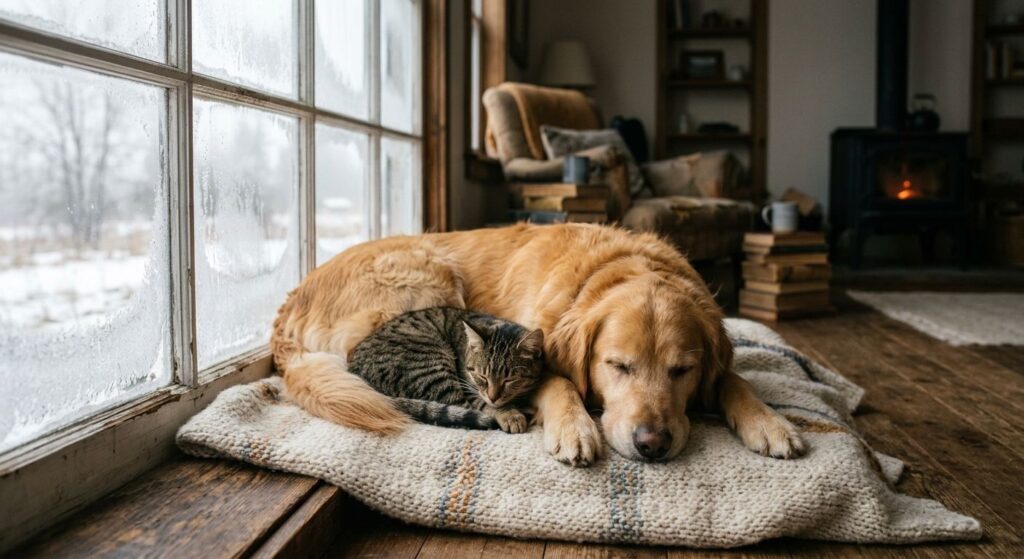
Winter in the Central Valley does not look like a postcard blizzard, and that is exactly why so many pet owners get caught out. If you have been searching for a trusted veterinarian near me as the temperature drops, this guide walks you through the real winter pet safety risks we see in Clovis, from near-freezing overnight lows to holiday toxins, so your dog or cat stays healthy through the coldest months.
Why Central Valley Winters Catch Clovis Pet Owners Off Guard
Clovis rarely gets snow, but our overnight lows routinely dip toward freezing from December through February. A 40-degree day can slide into the low 30s after dark, and pets left outside overnight feel that swing hard. Small dogs, thin-coated breeds, kittens, senior animals, and any pet with a chronic illness lose body heat faster than owners expect.
Then there is the tule fog. When that dense ground fog rolls across the valley floor, visibility on early morning and evening walks can drop to a few car lengths. Drivers cannot see a dog on a leash near the curb, and pets can lose their bearings quickly. Reflective gear, a shorter leash, and sticking to well-lit residential streets go a long way during fog season.
Recognizing Hypothermia and Cold Stress
Hypothermia sets in when a pet’s core temperature falls below its normal range, and it can happen faster in wet or windy conditions. Catching the early signs matters far more than a thermometer reading.
Warning signs in dogs
Watch for persistent shivering, a hunched posture with the tail tucked, reluctance to keep walking, whining, or lifting paws off cold ground. As cold stress deepens, shivering may actually stop, and you might notice lethargy, stiff muscles, or slowed breathing. A dog that suddenly seems sluggish and cold to the touch needs to be warmed gradually and assessed.
Warning signs in cats
Cats hide discomfort well, so signs are subtler. Look for a cat seeking heat sources constantly, curling into a tight ball in unusual spots, cold ear tips and paw pads, or a drop in appetite and activity. Outdoor and indoor-outdoor cats face the highest risk. A cat that feels cold and appears weak or unresponsive is an emergency.
When cold weather becomes an emergency
If your pet is unresponsive, cannot stand, is breathing slowly, or has pale gums, do not wait until morning. Knowing when to take your dog to the emergency vet can be the difference between a scare and a tragedy, and the same urgency applies to cats. Familiarize yourself with the broader cat emergency symptoms that warrant same-day attention so you are not guessing in the moment. When in doubt, call us and describe what you are seeing.
Winter Poisons: Antifreeze, Rodenticides and Holiday Toxins
Cold weather quietly increases the number of poisons around your home and garage, and several of them are among the most dangerous substances a pet can encounter.
Antifreeze and the sweet-taste danger
Ethylene glycol antifreeze tastes sweet, and both dogs and cats will lap up a spill from a driveway or garage floor. Even a very small amount can cause fatal kidney failure, and cats are especially sensitive. Clean up leaks immediately, store containers sealed and out of reach, and consider pet-safer propylene glycol products. If you suspect any exposure, treat it as a true emergency, because the window for effective treatment is short. The ASPCA (https://www.aspca.org) maintains excellent poison guidance for exactly these situations.
Rodenticides during peak winter use
Rodents move indoors when it gets cold, so winter is peak season for mouse and rat bait. These products are designed to be palatable, which makes them tempting to curious pets, and secondary poisoning is possible if a pet eats a poisoned rodent. Use tamper-resistant bait stations, keep them entirely inaccessible, and keep packaging so you can identify the active ingredient if an accident happens. The FDA (https://www.fda.gov) publishes safety information on these products.
Holiday toxins hiding in plain sight
The festive season stacks the deck against curious pets. Chocolate and the sweetener xylitol are toxic to dogs, lilies can cause fatal kidney injury in cats, and tinsel or ribbon can bunch up and obstruct a cat’s intestines. Grapes, raisins, onions, and rich table scraps add to the list. Keep treats, decorations, and gift wrap well out of reach, and brief houseguests who might slip your pet a snack.
The Hidden Danger Under Your Car
On cold mornings, outdoor and community cats crawl into warm engine compartments and wheel wells to shelter overnight. Starting the engine can cause severe, sometimes fatal injuries. Before you drive, bang on the hood, give the horn a quick tap, and check under the vehicle. It takes five seconds and it saves lives, especially in neighborhoods with free-roaming cats.
Arthritis and Joint Stiffness in Senior Pets
Cold, damp weather makes arthritic joints ache in pets just as it does in people. Older dogs and cats often move more slowly in winter, hesitate on stairs, struggle to jump onto the couch, or seem stiff after resting. Owners frequently mistake this for normal aging and delay a visit.
Do not let winter stiffness slide. Provide orthopedic bedding away from drafts, keep gentle activity consistent, and add ramps or steps for favorite perches. Our senior pet care team can evaluate whether your cat’s stiffness needs veterinary care or your dog would benefit from joint support, pain management, or a mobility plan tailored to the season.
Burns, Standing Water and Winter Skin
A few less obvious hazards round out the season, and they are easy to overlook until a pet is affected.
Space heater and fireplace burns
Pets gravitate toward warmth and get too close. Curious noses and swishing tails meet space heaters, and pets can knock units over and start fires. Use models with automatic tip-over shutoff, place them on stable surfaces, screen off fireplaces, and never leave a pet unsupervised near an open flame.
Standing water and leptospirosis
Winter rain leaves puddles and standing water across yards, parks, and trails. Leptospirosis, a bacterial disease spread through water contaminated by wildlife urine, becomes a bigger concern after storms, and it can affect both pets and people. Vaccination is the best protection for at-risk dogs. Review your dog’s core and lifestyle vaccines against a current dog and cat vaccination schedule so nothing has lapsed heading into the wet season. The CDC (https://www.cdc.gov) has clear background on how the disease spreads.
Winter fleas and dry indoor skin
Fleas do not disappear in a Central Valley winter. Warm, heated homes keep them active indoors year round, so consistent parasite prevention still matters in January. Meanwhile, indoor heating dries the air and pets develop flaky, itchy skin. Regular brushing, a humidifier, and a vet-approved diet with healthy fats help. The AVMA (https://www.avma.org) and pet parasite resource CAPC (https://capcvet.org) both offer sound seasonal guidance.
A Winter Case Study From Our Clovis Clinic
Last January, a Clovis family brought in Biscuit, an eleven-year-old Labrador mix who had grown reluctant to walk and was limping on cold mornings. The owners assumed he was simply slowing down with age. During his exam we identified moderate arthritis flaring in the winter cold, alongside mild dehydration and dry, flaky skin from the heated home. We built a plan that combined joint support, weight management, warmer indoor bedding, and a skin-friendly diet adjustment. Within a few weeks Biscuit was moving comfortably again and greeting his family at the door. His story is a common one each winter, and it is a reminder that stiffness and slowing down are not something to wait out.
Winter Risk Comparison: Dogs vs Cats
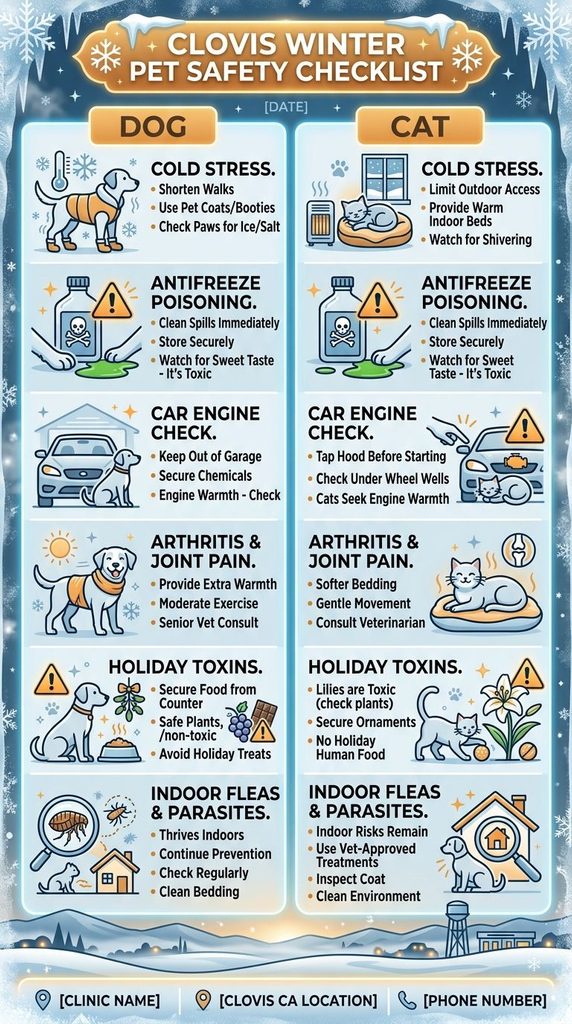
Different species face the season differently. This quick comparison helps Clovis owners focus their attention where it matters most.
| Winter risk | Dogs | Cats |
|---|---|---|
| Hypothermia and cold stress | High for small, thin-coated, and senior dogs | High, especially for indoor-outdoor cats |
| Antifreeze poisoning | High, will drink spills | Very high, extremely sensitive to small amounts |
| Engine compartment injuries | Low | High for outdoor and community cats |
| Arthritis flare-ups | Common in seniors and large breeds | Common but often hidden |
| Holiday toxins | Chocolate, xylitol, rich scraps | Lilies, tinsel, ribbon obstruction |
| Winter fleas indoors | Ongoing | Ongoing |
Booking a Pre-Winter Health Checkup in Clovis
The single best thing you can do before the cold sets in is schedule a seasonal exam. A pre-winter pet health checkup lets us catch early arthritis, confirm vaccines are current, review parasite prevention, and flag any condition that cold weather could worsen. It is far easier to prevent a winter emergency than to treat one at 10pm.
Alta Animal Hospital serves Clovis and the greater Fresno area from 585 W Shaw Ave, Clovis, CA 93612. To book a winter wellness visit or ask about any of the risks above, call our team at (559) 298-6509.
Winter safety is not about fear, it is about a few small habits that keep your dog or cat warm, poison-free, and moving comfortably until spring.
Frequently Asked Questions
-
How cold is too cold for my dog or cat in Clovis?
Most healthy pets tolerate temperatures above 45 degrees, but risk rises below that, and anything near freezing is dangerous for extended exposure. Small, thin-coated, young, senior, and ill pets feel the cold much sooner. Wind and rain make it worse by stripping body heat. As a rule, if it is too cold for you to stand outside comfortably, it is too cold for your pet to stay out unsupervised overnight.
-
What are the first signs of hypothermia in pets?
Early hypothermia usually starts with persistent shivering, a hunched or tucked posture, reluctance to move, and cold ears and paws. As it worsens, shivering may stop and you will see lethargy, muscle stiffness, weakness, and slowed breathing. Cats often hide and seek constant warmth. If your pet is cold to the touch and unusually sluggish or unresponsive, warm them gradually with blankets and contact a veterinarian right away.
-
Is antifreeze really that dangerous to cats and dogs?
Yes, ethylene glycol antifreeze is one of the deadliest household poisons for pets. It tastes sweet, so animals willingly drink even small spills, and it causes rapid, often fatal kidney failure. Cats are especially sensitive and can be poisoned by a tiny amount. Clean spills immediately, store it sealed and out of reach, and consider pet-safer formulas. If you suspect any exposure at all, treat it as an emergency, because early treatment is critical.
-
Why does my senior pet seem stiffer in winter?
Cold, damp weather aggravates arthritis and joint inflammation, so older dogs and cats commonly move more slowly, hesitate on stairs, or struggle to jump in winter. Many owners mistake this for ordinary aging and delay care. Warm, orthopedic bedding away from drafts, consistent gentle exercise, and a veterinary exam make a real difference. We can assess whether joint support, pain management, or a mobility plan would keep your pet comfortable through the cold months.
-
Do I still need flea prevention during a Clovis winter?
Yes. Fleas do not die off in a mild Central Valley winter, and heated homes keep them active indoors all year. Skipping prevention in the colder months lets infestations build quietly, then explode when it warms up. Keep your pet on consistent, year-round parasite protection, and pair it with regular grooming to spot problems early. A quick veterinary visit can confirm the right product for your pet’s species, weight, and lifestyle.
-
Should I bang on my car hood before driving in winter?
Absolutely, especially in neighborhoods with outdoor or community cats. On cold nights, cats climb into warm engine bays and wheel wells to shelter, and starting the engine can cause severe or fatal injuries. Before you drive, knock firmly on the hood, tap the horn, and glance underneath. It takes only a few seconds. This simple habit is one of the easiest ways to prevent a heartbreaking and entirely avoidable winter accident.