
If you have recently adopted a cat or are searching for cat vaccinations near me, two acronyms tend to come up fast: FeLV and FIV. These feline viruses are common, often misunderstood, and worth understanding before they affect your cat. This guide covers what they are, how they spread, and why FeLV and FIV testing in Clovis is one of the most useful things you can do for a new or existing cat.
What FeLV and FIV Actually Are
FeLV stands for feline leukemia virus, and FIV stands for feline immunodeficiency virus. Both are retroviruses, meaning they integrate into a cat’s cells and can affect the immune system over time, but they are two very different diseases with different risks and outlooks.
FeLV tends to be the more serious of the two. It can suppress the immune system, cause anemia, and increase the risk of certain cancers, and it spreads more easily between cats living together. FIV works more slowly. Many FIV-positive cats live long, comfortable lives and only develop problems years later, if at all. Confusing the two, or assuming a positive result is a death sentence, causes a lot of unnecessary heartbreak.
How Cats Catch These Viruses
The two viruses spread in different ways, which is exactly why the prevention advice for each is different.
How FeLV spreads
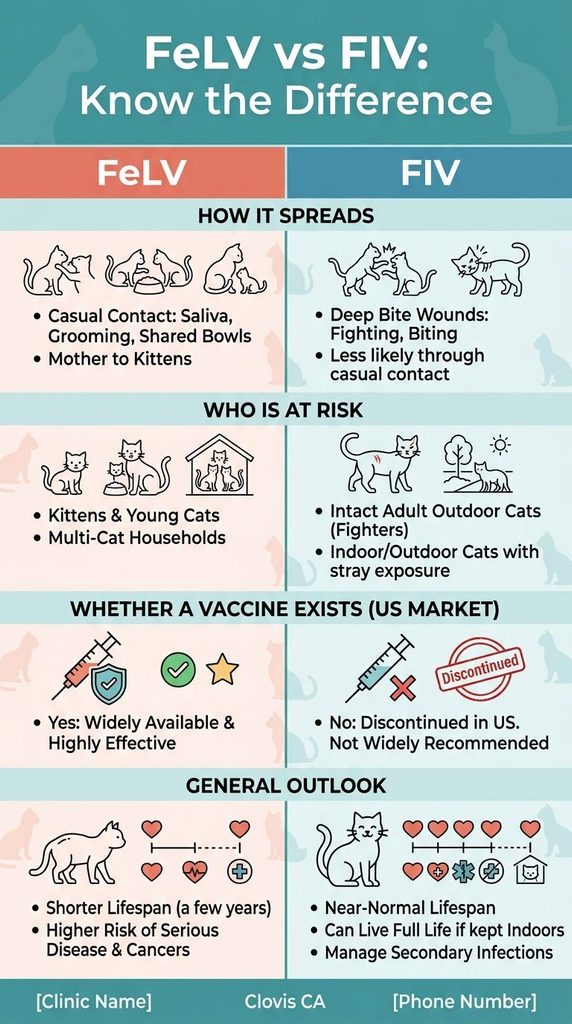
FeLV lives in saliva, nasal secretions, urine, and milk. It passes between cats through friendly, everyday contact: mutual grooming, sharing food and water bowls, using the same litter box, and from a mother cat to her kittens. Because it moves through casual contact, FeLV spreads readily in multi-cat homes, shelters, and outdoor colonies where cats mingle closely.
How FIV spreads
FIV is spread mainly through deep bite wounds, which is why unneutered, free-roaming males who fight are the highest-risk group. A puncture from a fight can also lead to a painful cat abscess, so a cat that keeps coming home with bite injuries deserves both wound care and a conversation about FIV testing. Casual contact and shared bowls rarely transmit FIV, so a calm, neutered FIV-positive cat can often live safely with others.
Why Testing Matters, Especially Before Adoption
You cannot tell whether a cat carries FeLV or FIV by looking at it. Many infected cats appear completely healthy for months or years while still able to pass the virus to others. That is the core reason testing matters.
Testing before you bring a new cat home protects the cats you already have. If you are building a household, a quick screen fits naturally into that first vet visit checklist and removes the guesswork. Shelters and reputable rescues often test before adoption, but results can be missed, kittens can need retesting, and a confirmed status on record is always worth having. Knowing early lets you plan housing, introductions, and monitoring instead of reacting to a surprise later.
The In-Clinic Snap Test: What to Expect
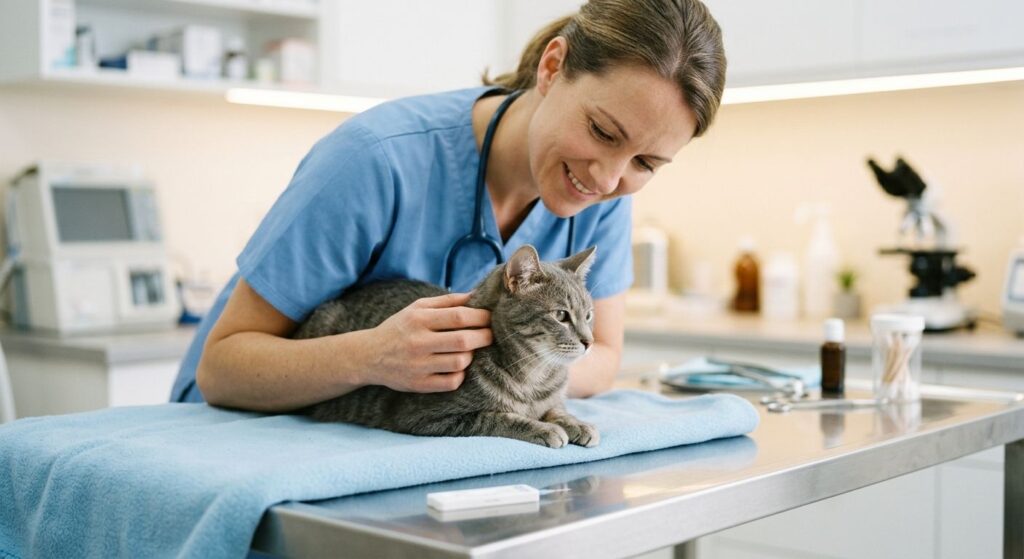
The most common first-line screen is a combination ELISA test, often called a snap test, that checks for both FeLV and FIV from a few drops of blood. We run this as part of our in-house diagnostics, so results are usually ready during the same visit rather than days later.
The blood draw is quick and the process is low stress for most cats. A negative result is reassuring, though timing matters: a cat exposed very recently may need a follow-up test a few weeks later, because it takes time for the virus or antibodies to reach detectable levels. Positive screening results are typically confirmed with a second, different test before any long-term conclusions are drawn. Kittens under six months who test FIV-positive often need retesting, since they can carry maternal antibodies that fade with age.
Vaccines and Prevention
Prevention looks different for each virus, and this is where many owners get tripped up.
There is a vaccine for FeLV, and it is strongly recommended for cats at risk, including kittens, outdoor cats, and any cat living with an FeLV-positive housemate. It is considered a lifestyle vaccine rather than a universal core one, so the right choice depends on your cat’s exposure. Our team reviews this during routine cat vaccines visits and matches the plan to how your cat actually lives. There is currently no FIV vaccine available in the United States, so prevention for FIV relies on keeping cats indoors, neutering to reduce fighting, and avoiding contact with unknown outdoor cats.
The indoor-only myth
A frequent assumption is that indoor cats are safe and do not need testing or any cat vaccinations. Reality is messier. Indoor cats escape, new cats join the household, a foster arrives, or a screen door gets left open. Vaccines for animals work best as a planned layer of protection, not a last-minute scramble after exposure. Testing and a sensible vaccine plan give indoor cats real backup for the moments life does not go as planned.
What a Positive Result Means
A positive result is not the end of the story. With good care, many of these cats do very well.
Managing an FeLV-positive cat
FeLV-positive cats should live strictly indoors, both to protect them from infections their immune system may struggle with and to prevent spread to other cats. They benefit from more frequent checkups, prompt attention to minor illnesses, a solid nutritional plan, and staying current on other vaccines. A consistent wellness exam schedule helps catch problems early, when they are most treatable.
Managing an FIV-positive cat
FIV-positive cats often live for many years with a normal quality of life. The priorities are keeping them indoors, spaying or neutering, feeding a complete diet, and treating infections quickly rather than waiting. With calm introductions, an FIV-positive cat can frequently share a home with FIV-negative cats, since the virus does not spread easily through everyday contact.
FeLV vs FIV: A Quick Comparison
| Feature | FeLV | FIV |
|---|---|---|
| Full name | Feline leukemia virus | Feline immunodeficiency virus |
| Main spread | Saliva, grooming, shared bowls, mother to kitten | Deep bite wounds |
| Highest-risk cats | Kittens, outdoor and multi-cat homes | Unneutered, free-roaming males |
| Vaccine available | Yes, for at-risk cats | No US vaccine currently |
| Typical outlook | More guarded, needs close monitoring | Often long, comfortable life |
| Can share a home with negative cats | Not recommended | Often possible with care |
A Clovis Patient Story
A local family adopted Milo, a friendly two-year-old shorthair, and brought him in for a new-cat check before introducing him to their older cat. His snap test came back FeLV-positive, which was a shock, since he seemed perfectly healthy. Rather than panic, we walked through a plan: Milo would stay indoors, keep his own space from the resident cat during a careful transition, and come in for wellness monitoring twice a year. Two years on, Milo is playful, well, and very much part of the family. His story is the one we wish more owners heard, because a positive result handled early is a manageable situation, not a lost cause.
Booking Cat Testing and Vaccines in Clovis
Whether you have just adopted, are worried about an outdoor wanderer, or simply want peace of mind, testing and a tailored vaccine plan are straightforward steps that make a real difference. Alta Animal Hospital serves Clovis and the greater Fresno area from 585 W Shaw Ave, Clovis, CA 93612. To schedule FeLV and FIV testing or discuss the right vaccines for your cat, call our team at (559) 298-6509.
For deeper reading, the American Association of Feline Practitioners (https://www.catvets.com) and the Cornell Feline Health Center (https://www.vet.cornell.edu) publish trusted retrovirus guidance, and both the AVMA (https://www.avma.org) and AAHA (https://www.aaha.org) offer sound vaccination advice for cat owners.
Testing is not about expecting bad news, it is about giving your cat the healthiest, longest life possible, whatever the result turns out to be.
Frequently Asked Questions
-
What is the difference between FeLV and FIV?
FeLV is feline leukemia virus and FIV is feline immunodeficiency virus. Both are retroviruses that affect the immune system, but they differ in important ways. FeLV spreads through casual contact like grooming and shared bowls, tends to be more serious, and has a vaccine. FIV spreads mainly through bite wounds, often progresses slowly, and has no vaccine in the United States. Many FIV-positive cats live long, comfortable lives with routine care.
-
How accurate is the in-clinic snap test for FeLV and FIV?
The combination snap test is a reliable first-line screen and gives results during the same visit from a few drops of blood. No screening test is perfect, so positive results are usually confirmed with a second, different test before firm conclusions are made. Timing also matters, since a very recent exposure may not show up yet. Kittens who test FIV-positive often need retesting later, because maternal antibodies can fade as they grow.
-
Can an indoor-only cat still get FeLV or FIV?
Yes. Indoor cats are lower risk, but not zero risk. Cats escape, new cats or fosters join the household, and doors get left open. A single fight with an infected cat during an escape can transmit FIV, and a new untested cat can bring FeLV inside. That is why testing new arrivals and keeping an appropriate vaccine plan still matters for indoor cats. Prevention works best when it is planned rather than rushed after exposure.
-
Is there a vaccine for FeLV and FIV?
There is an effective FeLV vaccine, recommended for at-risk cats such as kittens, outdoor cats, and those living with an FeLV-positive housemate. It is a lifestyle vaccine, so your veterinarian tailors it to your cat’s actual exposure. There is currently no FIV vaccine available in the United States. FIV prevention instead relies on keeping cats indoors, neutering to reduce fighting, and limiting contact with unknown outdoor cats. Your vet can build the right combination for your household.
-
Can a cat that tests positive live a normal life?
Very often, yes. Many FIV-positive cats live for years with a normal quality of life, and FeLV-positive cats can do well with attentive care. The keys are keeping positive cats indoors, staying current on other vaccines, feeding a complete diet, and treating minor illnesses promptly instead of waiting. More frequent wellness checks help catch issues early. A positive result changes how you care for your cat, but it does not have to shorten a happy life.
-
Should I test a new cat before introducing it to my other cats?
Absolutely. Testing before introductions is one of the best ways to protect the cats you already have. An infected cat can look perfectly healthy while still carrying FeLV or FIV, so appearances are not enough. A quick screen at the first visit tells you the status and lets you plan safe housing and introductions. If a new cat tests positive, your veterinarian can guide you on whether and how it can safely share your home.