
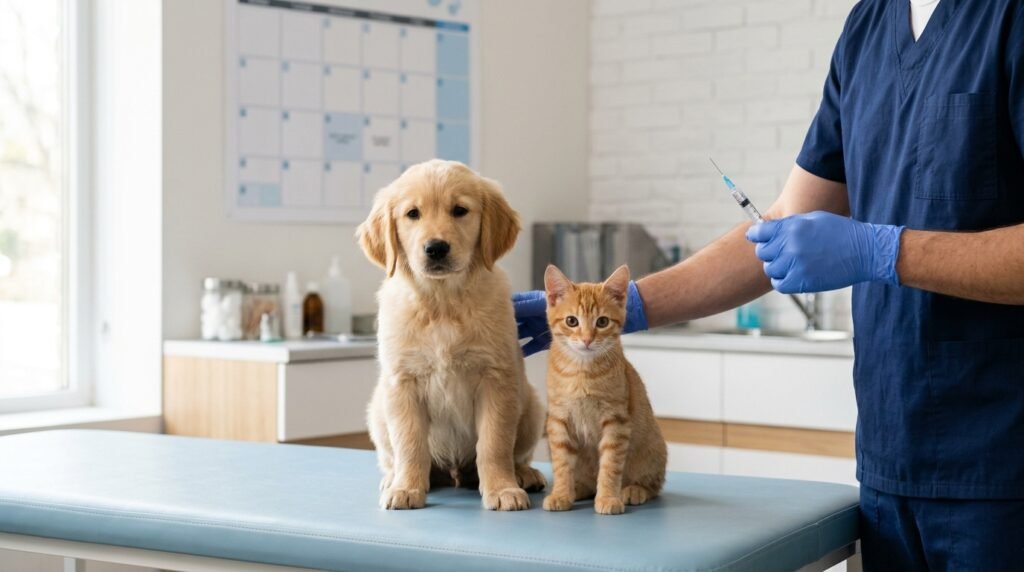
Puppy and kitten vaccines are given as a series between roughly 6 and 16 weeks of age, and the order, spacing, and final booster all matter more than most new owners expect, so if you just brought home a new pet and are searching for an animal clinic near me in Clovis, this timeline shows exactly what happens at each visit, why the shots are spread out, and how to keep your puppy or kitten social without leaving them exposed during the gap before immunity is complete.
Why First Shots Come as a Series, Not a Single Visit
A common question at a first appointment is why a puppy needs three or four rounds of dog shots when an adult dog gets one. The answer is the mother.
Maternal Antibodies: The Hidden Variable
Puppies and kittens absorb antibodies from their mother’s first milk. Those borrowed antibodies protect them for the first weeks of life, but they also neutralize vaccines. A shot given while those antibodies are still high simply does not register.
The problem is that nobody knows the exact day those antibodies fade in a given animal. According to the 2022 AAHA Canine Vaccination Guidelines, maternal protection against distemper usually wanes by 12 to 14 weeks, while protection against parvovirus can linger to 13 to 15 weeks or longer. Vaccinating every few weeks makes sure one dose lands right after that protection disappears.
Why the Last Dose Lands at 16 Weeks or Later
This is also why the final puppy dose has to be given after 16 weeks. AAHA recommends continuing until the puppy is older than 16 weeks, and suggests 18 to 20 weeks in high-risk areas. Parvovirus can survive in soil and on surfaces for months, and young unvaccinated dogs are its most common victims, so stopping the series early leaves a puppy unprotected at exactly the age it starts exploring.
Core vs Lifestyle Vaccines for Puppies and Kittens
Not every vaccine is for every pet. Veterinarians split them into two groups.
| Category | Puppy Vaccines | Kitten Vaccines |
|---|---|---|
| Core (recommended for all) | DA2PP (distemper, adenovirus, parvovirus, parainfluenza), rabies, leptospirosis | FVRCP (panleukopenia, herpesvirus, calicivirus), rabies, FeLV for all kittens under one year |
| Lifestyle (based on risk) | Bordetella (kennel cough), canine influenza | Additional FeLV boosters for outdoor or multi-cat homes |
| Typical drivers for lifestyle shots | Daycare, boarding, grooming, dog parks, training classes | Outdoor access, new cats in the home, fostering |
Leptospirosis moved into the core group for all dogs in AAHA’s 2024 update, which matters here because standing water, irrigation runoff, and wildlife are common around Clovis neighborhoods and nearby farmland.
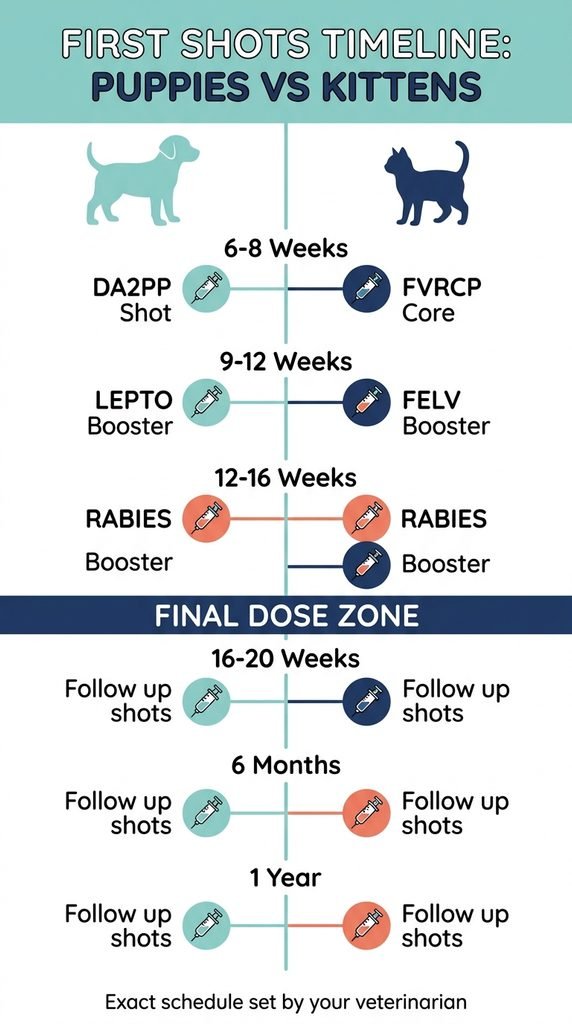
Puppy Vaccine Timeline: Week by Week
6 to 8 Weeks
- First DA2PP dose
- First deworming and fecal test
- Bordetella may be given if the puppy will be around other dogs early. AAHA notes the intranasal version works even in young puppies because maternal antibodies do not block it.
10 to 12 Weeks
- Second DA2PP dose
- Lifestyle vaccines discussed based on daycare, grooming, or training plans
- Heartworm and flea prevention started if not already in place
12 to 16 Weeks
- Third DA2PP dose
- First leptospirosis dose (given at 12 weeks or older), with a second dose 2 to 4 weeks later
- Rabies vaccine. California Health and Safety Code section 121690 requires dogs to be vaccinated against rabies once they reach three months of age.
16 to 20 Weeks
- Final DA2PP dose, given after 16 weeks
- Second leptospirosis dose if not yet complete
- Canine influenza second dose, if started
One Year
- DA2PP and rabies boosters within one year of the series, then on a schedule your vet sets based on vaccine label and lifestyle
- Annual leptospirosis booster
Kitten Vaccine Timeline: Week by Week
Kitten vaccines follow the same logic, with a few differences that catch owners off guard.
6 to 8 Weeks
- First FVRCP dose
- FeLV and FIV test before any FeLV vaccine is given
- First deworming
9 to 12 Weeks
- Second FVRCP dose
- First FeLV dose for all kittens
12 to 16 Weeks
- Third FVRCP dose
- Second FeLV dose, 3 to 4 weeks after the first
- Rabies vaccine, commonly given around 12 to 16 weeks
16 to 20 Weeks
- Final FVRCP dose at 16 weeks or older; high-risk kittens, such as those from shelters or multi-cat homes, continue to about 20 weeks
Six Months
- FVRCP booster. The 2020 AAHA/AAFP Feline Vaccination Guidelines moved this booster to six months of age instead of one year, to close any gap left by maternal antibodies.
| Age | Puppy | Kitten |
|---|---|---|
| 6 to 8 weeks | DA2PP #1, deworm, fecal | FVRCP #1, FeLV/FIV test, deworm |
| 9 to 12 weeks | DA2PP #2, lifestyle plan | FVRCP #2, FeLV #1 |
| 12 to 16 weeks | DA2PP #3, lepto #1, rabies | FVRCP #3, FeLV #2, rabies |
| 16 to 20 weeks | Final DA2PP, lepto #2 | Final FVRCP |
| 6 months | Spay/neuter planning | FVRCP booster |
| 1 year | DA2PP, rabies, lepto boosters | FeLV and rabies boosters |
The Socialization Window vs the Immunity Gap
Here is the real dilemma for new owners. The period when puppies learn to accept new people, places, sounds, and handling closes at around three to four months of age. That is the same stretch when their vaccines are still incomplete.
The American Veterinary Society of Animal Behavior has taken a clear position on this, as reported by the AVMA: behavior problems are the leading cause of death in dogs under three years old, so socialization should start before vaccination is complete. Puppies can begin structured classes as early as 7 to 8 weeks, provided they have had at least one round of vaccines seven days before the first class and a first deworming.
Where to Socialize Safely Before the Final Shot
| Lower Risk | Higher Risk |
|---|---|
| Puppy classes that require vaccine records and clean floors | Dog parks and public dog runs |
| Your home and fenced yard with healthy, vaccinated adult dogs | Pet store floors and busy sidewalks |
| Car rides and carrying your puppy through new places | Areas where stray or unknown dogs gather |
| Visits from friends, kids, and people wearing hats or uniforms | Beaches, rest stops, and trailheads with heavy dog traffic |
Kittens Need Socialization Too
Kittens have an even earlier sensitive window, roughly the first two to seven weeks of life, which often happens before adoption. Gentle daily handling, carrier training, and short car rides after adoption still make every future vet visit easier.
What Happens at Each Puppy and Kitten Visit
Every first-shots appointment is more than an injection. Here is what to expect.
Visit One: The Baseline
- Full nose-to-tail exam, including heart, lungs, eyes, ears, teeth, and skin
- Weight recorded to track growth
- Fecal test and deworming
- Discussion of puppy flea and tick prevention and heartworm protection
- For kittens, a FeLV and FIV blood test before vaccination
- Diet, house training, and crate questions answered
Visit Two: Building Protection
- Second core vaccine dose
- Growth and body condition check
- Lifestyle vaccines matched to your plans for grooming, boarding, or training classes
- Microchipping discussed, since a chip can be placed during a routine visit
Visit Three: Rabies and Leptospirosis
- Third core dose plus rabies
- First leptospirosis dose for puppies, second FeLV dose for kittens
- Rabies certificate issued for dog licensing
Final Visit: Closing the Series
- Final core booster after 16 weeks
- Plan for the six-month and one-year boosters
- Early conversation about spay or neuter timing
Vaccine Reactions: What Is Normal and What Is Not
Most pets feel a little off for a day after puppy vaccines or kitten vaccines. Normal signs include:
- Mild sleepiness or lower appetite for 24 to 48 hours
- Slight soreness or a small, firm lump at the injection site
- A low-grade fever
Call your vet right away if you see facial swelling, hives, repeated vomiting, trouble breathing, or collapse. These usually appear within minutes to a few hours. If your regular clinic is booked, search for same day vet appointments near me so your pet is seen quickly. For cats, any lump at a vaccine site that is still present three months later, is larger than two centimeters, or is growing one month after the shot should be checked.
Animal Vaccination Clinic vs Full-Service Vet for First Shots
Pop-up and mobile vaccine events are convenient, and they help many pets get covered. For a puppy or kitten’s first series, though, the setting makes a difference.
| Factor | Mobile or Pop-Up Animal Vaccination Clinic | Full-Service Veterinary Hospital |
|---|---|---|
| Physical exam with each shot | Often brief or none | Full exam every visit |
| Fecal testing and deworming | Not always available | Included in puppy and kitten care |
| FeLV/FIV testing for kittens | Rarely on-site | Run before the FeLV vaccine |
| Reaction monitoring | Limited | On-site team and treatment available |
| Records and reminders | Paper certificate | Tracked series with booster reminders |
| Follow-up for concerns | Usually none | Same practice for every visit |
For a healthy adult with a clear history, a vaccine event can work well. For a young animal in the middle of a series, continuity is the bigger advantage.
Case Example: Pepper’s Interrupted Puppy Series
The following case example is illustrative and reflects a common scenario in our practice.
Pepper, an Australian shepherd mix, came home at nine weeks with a single breeder-given vaccine and a handwritten note. Her family brought her in for her first visit at ten weeks, and she received her second DA2PP dose, a fecal test, and her first deworming.
Then summer travel got in the way. Pepper missed her 13-week visit and came back at 17 weeks. Because the gap was short and she had no signs of illness, our veterinarian did not restart the series from scratch. Instead, Pepper received a DA2PP booster, her rabies vaccine, and her first leptospirosis dose that day, with a final DA2PP and second leptospirosis dose three weeks later at 20 weeks.
During the gap, her family kept her socializing through a puppy class that required vaccine records, and they skipped the local dog park. Pepper finished her series without any illness, and her one-year boosters are already on the calendar.
Getting Puppy Shots Near Me in Clovis
The easiest way to stay on schedule is to book the whole series at the first appointment. Bringing your pet’s records, even a breeder’s sticker sheet, helps our team pick up exactly where the last dose left off. Our first vet visit checklist covers what to bring, and routine pet wellness exams in Clovis keep growth, parasite control, and vaccines in one plan.
If you are comparing options for dog vaccinations near me or cat vaccinations near me, look for a team that examines your pet at every visit and tracks boosters for you. Kitten owners can learn more about FeLV and FIV testing before the first FeLV shot, and dog owners planning ahead for adulthood can read about how often dogs need rabies shots in California.
When you are ready, you can book puppy shots near me online or call Alta Animal Hospital at (559) 298-6509. We are located at 585 W Shaw Ave, Clovis, CA 93612.
A vaccine series only protects your pet if it is finished. The final booster after 16 weeks is the one that counts most.
Frequently Asked Questions
-
When should my puppy get their first shots?
Most puppies receive their first DA2PP vaccine between 6 and 8 weeks of age, then a booster every two to four weeks until they are older than 16 weeks. Rabies is given at three months or older, as California law requires, and leptospirosis starts at 12 weeks or later. If you adopted a puppy without records, schedule a visit right away so your veterinarian can build a catch-up plan around their current age and health.
-
Why does my puppy need so many dog shots?
Antibodies from the mother’s milk block vaccines for the first weeks of life, and the exact day they fade differs for each puppy. Giving several doses a few weeks apart ensures one lands after that protection drops. Distemper antibodies usually fade by 12 to 14 weeks, while parvovirus antibodies may last until 15 weeks or longer, which is why the final dose must come after 16 weeks to be reliable.
-
What vaccines do kittens need?
All kittens need the FVRCP combination vaccine, which protects against panleukopenia, feline herpesvirus, and calicivirus. Rabies is also core, usually given around 12 to 16 weeks. Current feline guidelines recommend the FeLV vaccine for all kittens under one year, given after a negative FeLV test. FVRCP is boosted every three to four weeks until at least 16 weeks, followed by a booster at six months of age rather than waiting a full year.
-
Can my puppy go outside before finishing their vaccines?
Yes, with limits. Your own yard, car rides, and being carried through new places are generally low risk. Puppy classes that require vaccine records are also recommended, and puppies can start as early as 7 to 8 weeks if they had at least one vaccine round a week earlier. Avoid dog parks, pet store floors, and areas with unknown dogs until a week or two after the final booster, especially because parvo spreads easily in shared spaces.
-
What should I do if my puppy or kitten misses a booster?
Call your veterinarian and reschedule as soon as possible. A short delay usually does not mean restarting the whole series, though a longer gap or an unknown history may change the plan. Your vet will look at your pet’s age, the number of doses already given, and how much time has passed. Until the series is complete, keep your pet away from high-traffic areas where unvaccinated animals may have been.
-
Are vaccine side effects common in puppies and kittens?
Mild side effects are fairly common and usually pass within a day or two. Expect some sleepiness, a slightly lower appetite, or tenderness at the injection site. Serious reactions are rare but need immediate care, including facial swelling, hives, repeated vomiting, difficulty breathing, or collapse. If your pet had a reaction before, tell your vet so they can space vaccines, give pre-treatment, or keep your pet for observation after the next dose.
-
Where can I find an animal vaccination clinic near me in Clovis?
Alta Animal Hospital provides puppy and kitten vaccines with a full exam at every visit, fecal testing, parasite prevention, and FeLV and FIV testing for kittens. Our team tracks your pet’s series and boosters so nothing is missed. We are located at 585 W Shaw Ave in Clovis, and you can call (559) 298-6509 to schedule the first visit or continue a series your pet started elsewhere.
Start the series early, finish it on time, and let your new pet explore the world safely along the way.